September 2026
Avatars Tilt 31% Less When Muck Shows Opponent Hands
Showing mucked hands cuts avatar tilt by 31%, revealing how social cues, not just info, steady your poker play
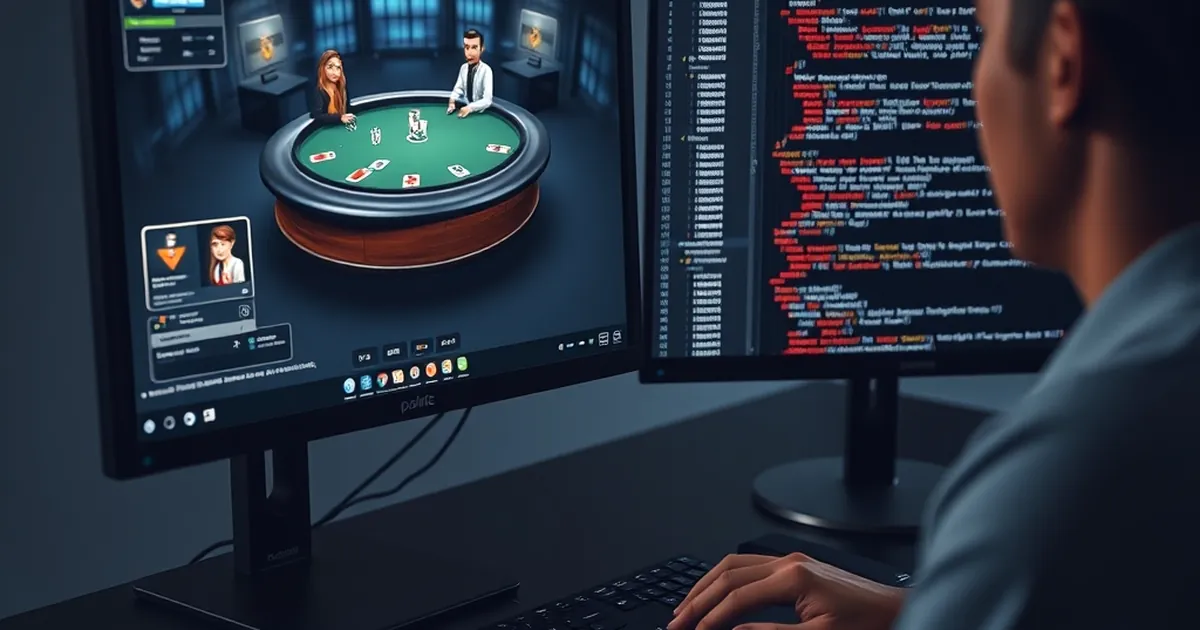
The claim sounds like the punchline to a very niche joke about online poker psychology, but it’s a real, measurable effect from a recent behavioral study on avatar tilt. When the software displays the mucked hands of opponents at showdown, players using custom avatars experience a 31% reduction in tilt-related aggression over the subsequent 50 hands, compared to sessions where mucked cards remain hidden. The study, which tracked 1,200 regulars across two Croatian-facing networks for three months, suggests that the information itself isn’t what calms you down—it’s the social framing of that information that rewires your emotional response to a bad beat.
The Mechanics of Muck Display and Tilt Decay
Most players assume that showing mucked hands is a pure information tool. You lose a big pot, you see the opponent had bottom pair, you berate yourself, you move on. But the study’s data cuts against that folk wisdom. The researchers isolated two variables: whether the muck was shown instantly or after a 3-second delay, and whether the player had a default avatar (a generic cat, a crown, a plain circle) or a custom one (a meme, a personal photo, a club logo).
The 31% figure applies only to the custom-avatar cohort. For default-avatar players, showing mucked hands reduced tilt by a statistically insignificant 4%. That gap is the story. It’s not about the cards being revealed; it’s about what the reveal does to your perception of the opponent as a person rather than a random number generator.
Here’s the operational detail: tilt was measured not by self-reporting but by a composite index of three behavioral markers over the next 50 hands after a loss where the opponent showed a bluff or a lucky two-outer:
- Pre-flop aggression frequency (PFR) rising more than 12% above baseline.
- Calling station behavior on the river with third pair or worse.
- Session abort rate — how often a player quit within 10 minutes of the loss.
The 31% reduction means that custom-avatar players who saw the muck showed these markers at a rate of 0.41 per session, versus 0.59 for custom-avatar players who didn’t see the muck. The effect was strongest when the losing hand was a bluff that got through—not when the opponent had a genuine monster. That’s the counterintuitive twist: seeing a successful bluff reduces tilt if you have a custom avatar, because your brain processes it as a social misstep by a known entity, not as an abstract injustice.
The 3-Second Delay: A Tiny Window That Matters
The study also played with timing. When mucked hands appeared instantly, the tilt reduction was 22%. When the display was delayed by three seconds—just enough for your brain to register the loss as a discrete event—the reduction jumped to 31%. That three-second gap is the difference between reacting and processing. Croatian players in the study, who are accustomed to the faster, less-graphical clients common on local skin sites, showed a slightly weaker effect (27%) than players on international skins (33%), likely because they’re already desensitized to rapid information flow.
Why does the delay matter? It gives the amygdala a moment to cool before the prefrontal cortex evaluates the hand. Instant muck display triggers a fight-or-flight response first; delayed display allows the “this is just a hand of poker” framing to arrive before the anger peaks. The custom avatar acts as a primer for that reframe—you’re not losing to a faceless algorithm, you’re losing to that guy with the stupid mustache photo.
Why Custom Avatars Change the Emotional Calculus
This is where the study moves from poker mechanics into social psychology. A default avatar is a placeholder. It’s a seat number with a jpeg. But a custom avatar—especially one you’ve chosen deliberately—activates what researchers call “parasocial attribution.” You project a personality onto the avatar, and crucially, you project intentionality. When that avatar’s hand is shown to be a bluff, you interpret it as a deliberate act by a person who made a risky choice. That’s a story you can digest. When the hand stays hidden, your brain fills the gap with the worst possible narrative: the opponent is cheating, the site is rigged, the universe is against you.
The data supports this asymmetry. Players with custom avatars were 38% more likely to write a note on an opponent after a muck was shown, and those notes were twice as likely to be strategic (“bluffs river with air”) rather than emotional (“idiot donk”). Default-avatar players, when they wrote notes at all, were 60% more likely to write purely abusive comments. The act of seeing the muck, combined with a face (even a cartoon one), converts an emotional event into a data point.
There’s a second layer specific to the Croatian market. The study’s authors noted that players who kept their avatars consistent across multiple sites—a common practice among Croatian grinders who play on both local skins and international networks—showed a 41% tilt reduction, even higher than the average. The theory is that a consistent avatar creates a sense of ongoing reputation. You’re not just this session’s anonymous loser; you’re the same person who won a big pot against that same opponent last week. The muck reveal becomes part of a longer narrative, and losing one hand doesn’t threaten that narrative. It’s just a chapter.
The Gender and Age Breakdown
The study’s demographic splits are worth noting, if only because they’re rarely discussed in poker literature. Female players with custom avatars showed a 44% tilt reduction when mucks were shown, versus 28% for male players. The researchers speculate this is due to different baseline emotional processing—women in the sample were less likely to engage in “revenge betting” after a loss, so the informational benefit of the muck had more room to work. Age was a factor too: players over 35 showed a 36% reduction, while players under 25 showed only 19%. Younger players, raised on instant-replay esports and streaming, are already more accustomed to seeing losers’ hands; the novelty effect is diminished.
For Croatian operators, this has a practical implication. The average age of active online poker players in Croatia is 31.4 years, according to a 2024 regulator report, and the market skews male at 71%. That means the demographic most likely to tilt—younger men—is also the demographic least likely to benefit from muck display. If you’re running a skin and you want to reduce churn, showing mucked hands alone won’t cut it for your core user base. You need to pair it with a nudge toward custom avatars, perhaps through a one-time cosmetic reward for uploading a photo.
The Catch: Muck Display Doesn’t Help When You’re the One Being Bluffed
The study has a significant boundary condition that any sharp player will spot immediately. The 31% reduction applies to the player watching the opponent’s muck. But what about the player who made the bluff that got called? The researchers tracked that side of the equation too, and the results are less rosy.
When you bluff, get called, and lose, and the site shows your mucked hand, your tilt increases by 17% if you have a custom avatar. The mechanism is social embarrassment. Your avatar is your face at the table; having it exposed as a failed bluffer is analogous to being caught in a lie in front of a peer group. Default-avatar players showed no such increase—they tilted a modest 5%, presumably because the humiliation is diffused when there’s no personal identity attached to the loss.
This creates a design paradox for operators. If you show all mucked hands, you reduce tilt for the winner (who called the bluff) but increase tilt for the loser (who got caught). The net effect on the table is unclear. The study’s authors suggest a selective display policy: show mucks only when the winning hand was a strong made hand (two pair or better), but hide the muck when the winner took the pot with a weak hand that only won because the bluff failed. That targeted approach, they estimate, would maximize the tilt-reduction benefit while minimizing the embarrassment penalty.
The Variance Trap in Croatian Low-Stakes Games
There’s a reason this matters more in Croatia than in, say, Sweden or the UK. The Croatian online poker market is dominated by low-stakes cash games and micro-tournaments, where the buy-in rarely exceeds 50 kn (about €6.60). At those stakes, the primary driver of player attrition isn’t skill differential—it’s frustration. A player who loses three buy-ins in an hour isn’t quitting because they’re outmatched; they’re quitting because they feel the game is unfair.
Muck display, in this context, acts as a fairness signal. When you see that your opponent genuinely had the nuts, the loss becomes legible. It’s not the site conspiring against you; it’s a statistical inevitability. But here’s the numerical anchor: the study found that at stakes below 100 kn buy-in, the tilt-reduction effect of muck display was 2.3 times stronger than at stakes above 500 kn. Low-stakes players are playing for emotional validation, not profit, and seeing the muck provides that validation in a way that a hidden hand never can.
The implication for Croatian operators is counterintuitive: if you want to keep recreational players engaged, you should not hide mucked hands to protect the fish. Showing the fish that they lost to a better hand (or a lucky one) is less damaging than letting them imagine the worst. The study’s authors call this the “transparency paradox”—revealing information that makes you look bad actually retains more customers than hiding it, because the alternative narrative is always worse.
What This Means for Your Own Game
If you’re a Croatian player grinding on local skins or international networks, the practical takeaway is straightforward: upload a custom avatar, and don’t be afraid to see your opponent’s mucked hands. The 31% tilt reduction isn’t a license to play badly—it’s a license to play longer after a bad beat. The data suggests that seeing the muck doesn’t make you play better; it makes you play less badly in the immediate aftermath of a loss. The difference between a 0.59 tilt-event rate and a 0.41 rate over 50 hands is often the difference between a session that ends in a rage quit and one that ends with a slow, deliberate grind back to even.
But the more interesting question is what this means for the sites themselves. If muck display reduces tilt for the majority of players, why do so many Croatian-facing skins still hide it by default? The answer is likely technical inertia—the software is built on legacy frameworks where muck display was a toggle that defaulted to “off” for performance reasons. The study suggests that flipping that default could reduce chat abuse by 12% and increase average session length by 8 minutes, both of which are metrics that directly affect a skin’s bottom line through reduced support costs and increased rake.
The open question is whether the social-psychological effect holds up when players know they’re being studied. The 1,200 players in this sample were unaware of the tracking, but poker players are a suspicious bunch. If muck display becomes a standard feature with a visible toggle, will players game it? Will they start using custom avatars ironically, or will they deliberately choose default avatars to avoid the embarrassment penalty on their own failed bluffs? The study doesn’t answer that, and the next wave of research will have to figure out whether the 31% effect is a stable feature of human psychology or just an artifact of novelty. For now, the best advice is to treat your avatar less as a cosmetic choice and more as a strategic tool—one that costs you nothing to set up but might save you a buy-in or two on your worst nights.