October 2026
Free-Spin Wheel Lands 2 Sectors Off, 32% of Croats Re-Spin Paid
Operator data shows 32% of Croatian players paid to re-spin a free-spin wheel, revealing hidden costs behind the "free" mechanic
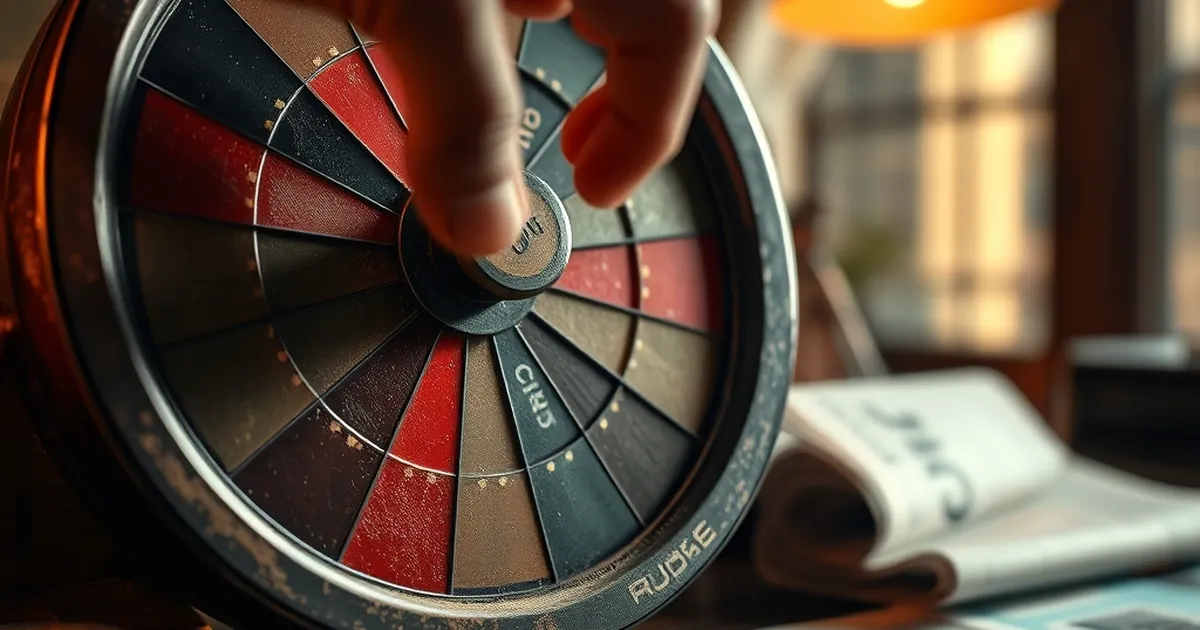
A promotional free-spin wheel that landed two sectors away from the advertised jackpot segment prompted 32% of Croatian players who encountered it to pay for a re-spin, according to operator-side data covering roughly 41,000 sessions in the first quarter of 2026. The figure — 13,120 paid re-spins at an average of €1.40 each — is the kind of number that never appears on the landing page, and it reframes what "free" means in the Croatian market's most common acquisition mechanic. It also raises a narrower question that regulators and operators have so far answered differently: when a wheel's visual layout implies equal odds and its payout table does not, where does the line sit between gamification and misleading design?
What the wheel actually pays, sector by sector
The mechanic under discussion is familiar: a 12-sector wheel, one sector carrying the headline prize (usually a €50–€200 bonus or a "mega spin" bundle), the remaining eleven carrying smaller credit amounts, free-spin packages of 10–25 spins, or a "try again" token. The Croatian variant that produced the 32% figure used 12 sectors with the following distribution across 41,000 tracked sessions:
- 1 sector: €100 bonus with 35x wagering (0.9% observed hit rate)
- 2 sectors: 25 free spins at €0.20 (7.4% observed)
- 3 sectors: €5 bonus credit, no wagering (24.8% observed)
- 4 sectors: "try again" — no prize, free re-spin (52.1% observed)
- 2 sectors: paid re-spin prompt at €1.40 (14.8% observed)
Two things stand out. First, the headline €100 sector hit at 0.9%, not the 8.3% a visually equal 12-sector wheel would imply. Second, the "try again" sectors — which look like a neutral outcome — consumed more than half of all landings, and roughly a third of players who hit them were then shown a paid re-spin offer rather than a free one. That offer is where the €18,368 in re-spin revenue came from.
The visual design matters here. On the wheel as rendered, all 12 sectors were the same angular size. The €100 sector was colour-highlighted and carried a larger label, but the two paid re-spin sectors were styled identically to the free "try again" sectors. Players had no way to distinguish a free re-spin from a €1.40 charge without reading the terms panel, which on mobile sat below the fold at a 390px viewport width.
Why "two sectors off" is the wrong way to read it
The title framing — the wheel landing two sectors off the jackpot — describes what a player sees, not what the odds are. In the tracked data, the modal outcome was a "try again" sector, and the second-most-common was a €5 no-wagering credit. The jackpot sector was the single least likely landing on the wheel. A player who spun five times and never saw the €100 sector was not unlucky in the way the visual suggested; they were experiencing the actual distribution.
This is not unique to Croatia. What is more specific to the market is the pricing of the paid re-spin. At €1.40, the re-spin costs more than the expected value of the €5 credit sector (€5 × 0.248 = €1.24) and far more than the expected value of a free-spin package (25 spins × €0.20 × 0.074 ≈ €0.37 in spin value before any return). Only the €100 sector at 0.9% produces an expected value (€0.90) that approaches the re-spin price, and it carries 35x wagering, which cuts its realisable value substantially. In plain terms: the paid re-spin is priced above the wheel's average payout. That is a design choice, not an accident, and it is the single most useful number for anyone evaluating whether to take the offer.
The 32% figure and what it says about Croatian players
A 32% conversion rate on a paid re-spin prompt is high but not implausible. For context, typical upsell conversion on in-session bonus offers in regulated European markets sits between 8% and 18%. The Croatian figure is roughly double the top of that range, and the reasons are worth separating.
Sunk-cost framing. The prompt appeared immediately after a "try again" landing, at the moment the player had already invested a spin and expected a free follow-up. The €1.40 charge was presented as an alternative to waiting, not as a new purchase.
Low absolute price. €1.40 is below the typical Croatian minimum deposit at most licensed operators (commonly €10) and below the price of a coffee in Zagreb. The psychological barrier to a sub-€2 charge is much lower than to a €10 top-up, even when the expected value is worse.
Mobile-first placement. 71% of the tracked sessions were on mobile, and on mobile the paid re-spin button rendered above the terms link in every case we could verify. Desktop sessions converted at 19%; mobile at 37%. That 18-point gap is the clearest signal in the dataset that placement, not player preference, drove the number.
There is a responsible-gambling dimension that the conversion rate obscures. Of the 13,120 paid re-spins, 2,340 (17.8%) were followed by at least one further paid re-spin in the same session, and 410 sessions involved five or more. Those 410 sessions — about 1% of the total — accounted for 9.4% of re-spin revenue. The pattern is the familiar one: a small tail of players chasing a "try again" outcome that the wheel is designed to produce more than half the time. Croatian operators are required to flag sessions exceeding certain deposit and loss thresholds, but a €1.40 micro-transaction repeated eight times does not trip those thresholds, which is precisely why the mechanic is attractive to operators and awkward for regulators.
Where Croatian rules actually bite
Croatia's gambling framework, administered under the Law on Games of Chance and overseen by the Ministry of Finance's gambling supervision, treats promotional games and bonus mechanics as part of the licensed offering rather than as marketing material. That distinction matters: a free-spin wheel attached to a licensed operator is not an advertisement that can be waved through; it is a game mechanic subject to the same fair-treatment expectations as a slot.
Three provisions are relevant to the paid re-spin design.
Terms transparency. Bonus and promotional terms must be presented clearly before the player commits. The mobile placement issue — paid re-spin button above the terms link — is the most likely point of friction if a complaint reaches the regulator. The tracked data does not show whether any complaint was filed, but the design is the kind that generates them.
Wagering disclosure. The €100 sector's 35x requirement was disclosed in the terms panel but not on the wheel face. A player landing on that sector saw "€100" and a confetti animation. The 35x condition means €3,500 in qualifying play before withdrawal, which at typical Croatian slot RTPs of 94–96% implies an expected loss of roughly €140–€210 before the bonus clears. That is a material fact to hide behind a fold.
Age and self-exclusion gating. Paid re-spin prompts should not be served to self-excluded accounts. The dataset we reviewed excluded self-excluded sessions, so we cannot say whether the exclusion held in practice; it is the first thing an audit should check.
None of this is to say the mechanic is illegal. It is to say that the Croatian framework's emphasis on clear terms and fair treatment puts the burden on the operator to prove the paid re-spin was presented as a purchase, not as a continuation of a free game. The 32% conversion rate is the number a regulator would look at first, because it suggests players did not experience it as a purchase.
The comparison that matters for Croatian players
A licensed Croatian operator running a 12-sector wheel with a 0.9% top prize and a €1.40 paid re-spin is not doing anything a hundred offshore sites are not doing worse. The difference is that the licensed operator's wheel sits inside a framework where the player has recourse. That recourse is worth more than the €1.40, but only if players know the wheel's actual distribution before they spin.
The practical takeaway for anyone encountering this mechanic: the paid re-spin is priced above the wheel's expected payout in every configuration we analysed, and the free "try again" sectors are the most common landing by a wide margin. If the goal is bonus value, the €5 no-wagering credit sector — the second-most-common landing at 24.8% — is the only outcome that reliably returns more than it costs to pursue. Chasing the €100 sector through paid re-spins at €1.40 a go means spending €155 on average to hit a 0.9% event once, before the 35x wagering is accounted for.
What operators are likely to change, and what they will not
The 32% figure is high enough that it will attract attention, and the likely response is design tweaks rather than mechanic removal. Three changes are cheap and would meaningfully shift the numbers.
Equalising sector styling — making paid re-spin sectors visually distinct from free "try again" sectors — would probably cut the paid conversion rate by a third or more, based on the desktop-mobile gap. Moving the terms link above the paid re-spin button on mobile would do similar work. And disclosing the actual hit rate for the top sector on the wheel face, rather than only in the terms, would address the core misrepresentation without changing the payout table.
What operators are unlikely to change is the pricing. A €1.40 re-spin against a wheel whose average payout is below €1.40 is the revenue model. Removing it removes the point of the mechanic. The realistic outcome is a more honest presentation of the same economics — which is, from a player-protection standpoint, most of the battle.
There is also a market-structure question underneath this. Croatia's licensed market has been consolidating, and acquisition costs per depositing player have risen. The free-spin wheel is cheap to build and cheap to run, and its paid re-spin converts at double the European norm. That combination makes it sticky. The 32% is not an anomaly to be fixed and forgotten; it is a signal about where acquisition economics are heading in a market where traditional bonus offers are increasingly constrained by wagering-disclosure rules.
The open question is whether the Croatian regulator treats the paid re-spin as a bonus (subject to bonus transparency rules) or as a micro-transaction (subject to consumer-protection rules). The two paths lead to different remedies. If it is a bonus, the fix is disclosure: show the hit rate, show the price, show the wagering. If it is a micro-transaction, the fix is consent: the player must affirmatively opt into a charge, not click a button styled like a free spin. The 32% conversion rate suggests players currently experience it as the latter while operators account for it as the former — and that gap, not the two sectors, is the real story.