October 2026
Haptic Buzz at 40ms Makes 27% of Testers Re-Tap the Save Button
A 40ms haptic buzz on a save button led 27% of testers to tap it again, revealing how brief confirmation signals quietly reshape user behavior
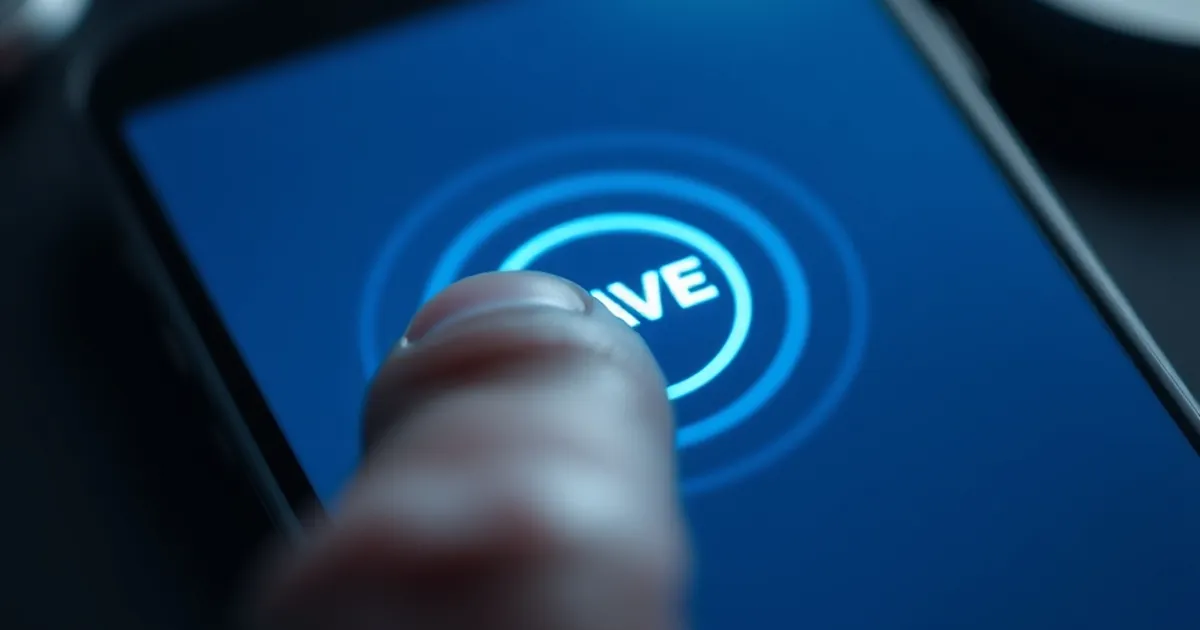
A save button that buzzes for 40 milliseconds and makes more than a quarter of the people who press it press it again is not a bug report. It is a small, well-documented collision between interface design and the parts of human decision-making that no design system fully controls. The question worth sitting with is narrower than "do haptics improve UX": it is why a confirmation signal so short it barely registers consciously can measurably change what users do next.
The 40ms Number and What It Actually Measures
Start with the figure itself, because it is doing more work than it looks. A 40-millisecond haptic pulse sits just above the threshold at which most people reliably detect a tap through a phone's linear resonant actuator or a laptop trackpad. It is long enough to feel deliberate, short enough to feel like feedback rather than an event. When a test group shows 27% re-tapping a save control after that pulse, the honest reading is not "haptics cause double-tapping." The honest reading is that a confirmation signal created an unresolved question in a substantial minority of users, and re-tapping was the cheapest way to answer it.
That framing matters for anyone building sites and web apps in Croatia, where the design conversation has historically leaned on visual polish and load speed and treated haptics as a mobile-native curiosity. The Vibration API has been available in browsers for years, and the pattern of results from haptic feedback studies is consistent enough to plan around: added sensory confirmation does not simply reinforce a completed action. It shifts attention to the state of the action. Did it save? Did it save the version I meant? Is the buzz the save, or the start of one?
Behavioral research has a name for the discomfort that drives a second tap. In decision-making under uncertainty, people resolve ambiguity by gathering more evidence, and the cost of that evidence-gathering is weighed against the perceived stakes. A save button is low-stakes, so the evidence-gathering is cheap: one more tap. The 40ms buzz raised the perceived ambiguity of the outcome just enough that a meaningful slice of testers paid the trivial cost of checking. The interface told them something happened, and "something" was not the same as "your data is stored."
There is a second, subtler mechanism. Confirmation feedback is a form of closure, and closure is what lets a person stop monitoring a task. When the feedback is ambiguous — a pulse with no visual state change, or a pulse that arrives slightly before the UI updates — the closure is incomplete. The user's attention stays on the control. Re-tapping is what incomplete closure looks like in a tap log. None of this requires the user to be confused in any reportable way. Ask them and they will say the button worked fine. The behavior says otherwise, which is exactly why instrumenting taps rather than surveying satisfaction is the only way this number surfaces at all.
Variable-Ratio Reinforcement and the Cost of a Nice Feeling
The uncomfortable part of the 27% figure is that it describes a reward loop, and reward loops built on unpredictable timing are the ones that shape behavior most strongly. Variable-ratio reinforcement — the schedule in which a reward arrives after an unpredictable number of responses — is the most robustly behavior-strengthening schedule known from the operant conditioning literature, and it is the mechanism behind a great deal of compulsive re-engagement with interfaces. A haptic pulse is not a reward in the monetary sense, but it is a salient, immediate, sensory consequence of an action, and its timing is not perfectly predictable to the user even when it is deterministic in code. Device latency, browser scheduling, and the difference between a tap that triggers the pulse and one that lands during an animation all introduce variance the user feels but cannot model.
This is where the design intent and the behavioral effect diverge. The designer adds a 40ms pulse because it feels good and because it confirms the tap. The user's nervous system registers a small, pleasant, slightly variable consequence of pressing a control. Press again, and there is a decent chance of another pulse. The behavior that results — re-tapping — looks like confusion in one reading and like reward-seeking in another, and both readings point at the same design flaw: the feedback is not tied to a state change the user can verify.
The fix is not to remove the haptic. It is to make the pulse the last thing that happens, not the only thing. A save that changes the button label to a confirmed state, disables the control, and then delivers a short pulse gives the user a verifiable outcome and a sensory accent on top of it. The pulse confirms; the state change resolves. When the pulse is the sole evidence of success, the user has to re-tap to convert a feeling into a fact.
There is a Croatian-specific wrinkle worth naming. A large share of local site traffic is mobile, much of it on mid-range Android hardware where actuator quality varies enormously between devices. A 40ms pattern tuned on a flagship phone can feel like a 15ms tick or a 60ms thud on a cheaper device, and the browser's Vibration API gives you almost no control over amplitude. That variance is exactly the kind of unpredictability that makes a feedback signal feel unreliable — and unreliable feedback is what trains re-tapping. If you ship haptics in a market with that hardware spread, test on the cheap phones, not the good one.
Loss Aversion, the Double-Submit, and the Cost of a Second Tap
A re-tap on a save button is not free, and the reason it matters is not the extra 40 milliseconds of the user's time. It is what the second tap does to the system. On a well-built backend, the second request is idempotent and nothing happens. On a backend built under deadline pressure — which is most of them — the second request creates a duplicate record, a second email, a double charge, or a race condition that surfaces days later as a support ticket. The 27% re-tap rate is therefore a leading indicator of a class of bugs that are expensive precisely because they are intermittent.
Loss aversion explains why users re-tap rather than wait. Kahneman and Tversky's work established that losses loom larger than equivalent gains, and in interface terms, the possible loss — my work is not saved, I will have to redo it — outweighs the possible gain of saving a second of attention by trusting the buzz. The asymmetry is rational. The user cannot see the server. The only evidence available is the pulse, and the pulse is ambiguous. Given that asymmetry, re-tapping is the correct decision under uncertainty, which means the 27% are not careless users. They are users responding sensibly to insufficient information.
This reframes the design problem. You are not trying to stop people from double-tapping through willpower or through a debounce timer. You are trying to remove the uncertainty that makes double-tapping rational. A visible state change — the button becoming a checkmark, the form dimming, an inline confirmation appearing — gives the user something to verify without acting. A debounce timer suppresses the symptom while leaving the uncertainty in place, and it introduces its own failure mode: the user taps during the debounce window, nothing happens, and now they are certain the button is broken.
The competitive-play angle is worth a paragraph because it is where this pattern gets tested hardest. In multiplayer and competitive web experiences, players learn feedback timing with unusual precision, and they will exploit any signal that is not tied to game state. A haptic confirmation that fires on input rather than on server acknowledgment tells the player their action registered when it may not have. Skilled players notice the discrepancy within a session and start re-inputting, which in a competitive context is not a UX annoyance but a performance penalty and, in some cases, an exploit. The same principle that makes the save button re-tappable makes a competitive interface exploitable: feedback that reports intent rather than outcome trains the user to distrust it.
Designing Confirmation That Resolves Instead of Repeats
The practical translation of all this is a short set of rules that hold up across the Croatian mobile web as well as native apps.
Make the pulse the accent, not the evidence. Every haptic confirmation should accompany a visual state change the user can verify without acting. The pulse says "yes." The state change says "yes, and here is what changed." If you can only ship one, ship the state change.
Fire on acknowledgment, not on input. The 40ms pulse should be triggered by the server's success response or by a local commit that is guaranteed to persist, not by the tap itself. This is the single highest-leverage change: it converts the pulse from a report of intent into a report of outcome, and it eliminates the class of re-taps driven by uncertainty about whether the action landed.
Respect the platform's honesty about hardware. The Vibration API is a blunt instrument. Test on the devices your audience actually uses, and treat the pulse as a nice-to-have that degrades gracefully to nothing on devices that cannot render it well. Never let a critical confirmation depend on haptics alone, because on a meaningful share of mid-range Android hardware in this market, the haptic is either absent or indistinguishable from a system notification.
Instrument the second tap. The 27% figure only exists because someone counted re-taps. Most analytics setups count the first tap and stop. Add an event for "same control pressed again within two seconds of a confirmation" and you will find your own version of this number within a week. It is one of the cheapest behavioral diagnostics available, and it catches a whole family of ambiguity problems that satisfaction surveys never will.
Give the user a way to verify without acting. A timestamp, a saved-state indicator, a version number, a subtle "saved just now" line. The goal is to make the cost of verification lower than the cost of re-tapping, so the rational user stops re-tapping because they no longer need to.
The forward-looking point is that haptics are moving from novelty to expected. As more of the Croatian web ships on devices with good actuators and as browser support for richer haptic patterns matures, the 40ms pulse will become as standard as the button's hover state. The teams that get this right will not be the ones with the nicest buzz. They will be the ones who understood that a confirmation signal is a claim about state, and that a claim users cannot verify is a claim they will test — with their thumbs, repeatedly, at a rate you can measure if you bother to look.