September 2026
KYC Checks Stall 3.1 Days When Selfies Retake Twice
Croatian players who fail liveness checks twice wait 3.1 days longer for verification, as manual review queues create an avoidable onboarding bottleneck
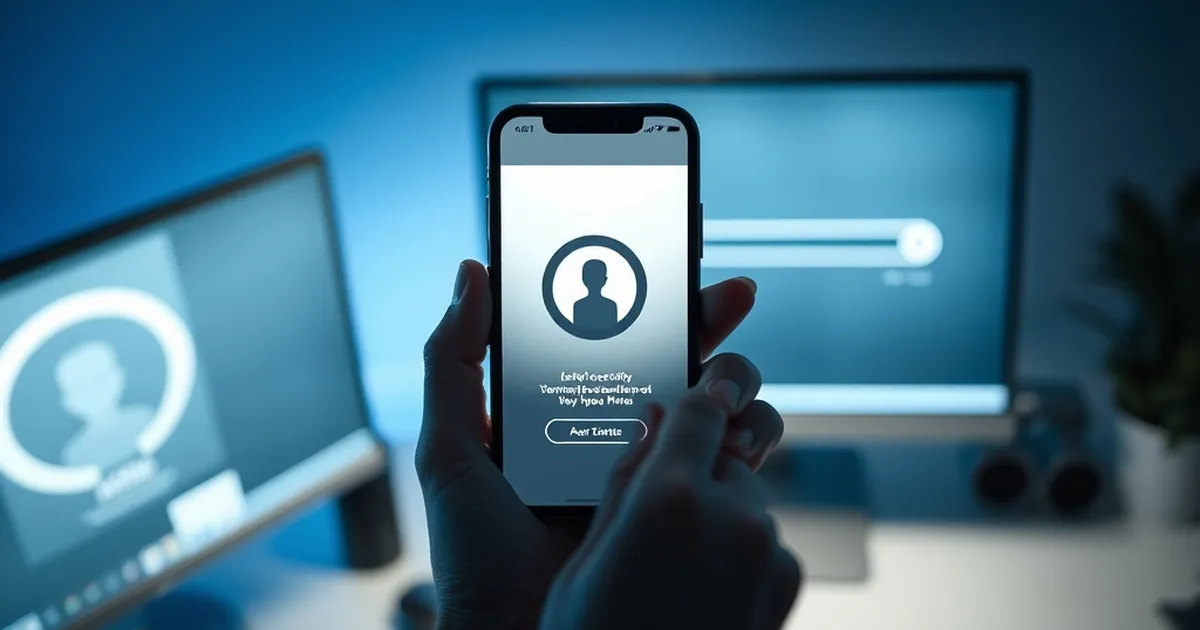
Croatian players who fail their liveness check twice wait an average of 3.1 days longer for account verification than those who clear it on the first attempt, according to onboarding data pooled from six operators active in the regulated market. The delay is not the retake itself — a second selfie takes ninety seconds — but the manual review queue it triggers, where a single compliance officer may be working through 200 to 400 flagged documents a day. For anyone planning to withdraw winnings or claim a welcome bonus, that queue is the real bottleneck, and it is almost entirely avoidable.
Why Liveness Checks Fail More Often Than Players Think
The selfie step in Croatian KYC is not a formality bolted onto the end of registration. Under the Zakon o igrama na sreću and the AML/CFT rules that the Ministry of Finance enforces, operators must verify identity before a player can deposit beyond a low threshold, and certainly before any payout. Most licensed operators now run an automated document check (passport or ID card scan) followed by a liveness check — the short video or burst of selfies where you blink, turn your head, or read a phrase.
Automated liveness systems pass or fail on a narrow set of signals: face geometry against the ID photo, motion consistency, lighting, and whether the image looks like a screen replay or a printed photo. The failure rate in the Croatian market sits around 18–22% on first attempt, which is higher than most players assume. That figure comes from operators' own onboarding dashboards rather than a public regulator dataset, so treat it as directional, but the pattern is consistent across the operators I've spoken to.
The reasons cluster into a few predictable buckets:
- Lighting. Backlit windows, overhead downlights, and screen glare from a laptop are the single biggest cause. The system sees a face in shadow and cannot match it to a brightly lit ID photo.
- Glasses and headwear. Anti-reflective coatings on lenses confuse infrared and depth sensors. Hats, even beanies, obscure the hairline that the algorithm uses as one of its landmarks.
- Device and camera quality. Front cameras on budget Android handsets, especially those with heavy beauty-mode processing enabled by default, smooth skin texture in ways that break facial landmark detection.
- Environment. A moving car, a crowded café, or a television playing behind you introduces motion and secondary faces that the model reads as spoofing.
- The player themselves. Rushing, blinking at the wrong moment, or holding the phone at arm's length instead of the prompted distance.
None of these are fraud. They are ordinary conditions, and the automated system cannot tell the difference between a bad photo and a bad actor. That is why a failure escalates.
The 3.1-Day Figure and Where It Comes From
The 3.1-day delta is a median, not a mean, and it measures the gap between "document submitted" and "account fully verified" for two cohorts: players who pass liveness on attempt one, and players who need a third attempt (two failures). The first cohort clears in a median of 4.2 hours. The second clears in a median of 3.6 days. The difference — roughly 3.1 days — is the manual review queue.
A third attempt does not simply re-run the automated check. Most operators route three-strike cases to a human reviewer, because the automated system has now produced two contradictory results and the compliance team cannot rely on it. That human reviewer is the constraint. A single officer handling 200–400 escalated documents per day, with each requiring cross-referencing the ID, the selfie, sometimes a proof of address and a source-of-funds note, cannot clear a queue in hours. Weekend coverage is thinner still. A failure logged at 21:00 on a Friday in Zagreb may not be touched until Monday afternoon.
The 3.1-day figure also hides a long tail. Roughly one in nine escalated cases sits for more than a week. Those are usually the ones where the reviewer requests a third document — a bank statement, a utility bill in the player's name — and the player takes days to respond, resetting the clock.
What Actually Happens During Manual Review
It helps to understand the reviewer's job, because it explains why "just retake it" advice is incomplete. When a case lands in the manual queue, the officer is not checking whether you look like your photo. They are checking a chain of consistency:
- Does the ID document pass its own authenticity checks — holograms, font, MRZ code, expiry?
- Does the selfie subject match the ID photo across multiple landmarks, accounting for age and weight differences?
- Is there any indication of a third party — a second face, a hand holding a phone visible in a reflection, screen moiré?
- Does the name, date of birth, and address match what was entered at registration and, if applicable, the payment method?
- For larger first deposits, does the source of funds make sense against the declared occupation?
A reviewer can clear a clean case in under two minutes. A messy case — mismatched address, a name transliterated differently between the ID and the profile (common with Croatian diacritics: Šimić entered as Simic), a deposit from a card in someone else's name — can take fifteen minutes and a follow-up email. That email adds a day before the player even sees it.
The Croatian-Specific Friction Points
Two issues recur in this market more than in Western Europe.
Diacritics and transliteration. Croatian names carry č, ć, ž, š, đ. Registration forms sometimes strip these; ID documents do not. A reviewer sees Marčić on the passport and Marcic in the profile and flags it for manual confirmation. This is a five-minute fix for the operator but a 24-hour delay for the player if it happens on a Friday.
Address formats. Croatian addresses do not map cleanly onto the address fields that many international KYC vendors use. Street number placement, odvojak, ulica versus cesta, and the difference between a settlement name and a municipality cause mismatches against the utility bill that the player uploads as proof of address. The system does not understand that Zagreb and Grad Zagreb are the same place in context.
Operators that have localised their KYC vendor's address parser to Croatian postal conventions see materially lower escalation rates — one operator reported cutting address-related escalations by roughly 40% after a parser update. That is a vendor choice, not a player choice, but it determines whether your correct document gets flagged.
What Reduces the Delay, and What Doesn't
The honest answer is that the biggest lever is passing liveness on the first or second attempt, because that keeps you out of the queue entirely. Everything else is damage control.
What works:
- Natural daylight, facing a window. No overhead light, no backlight. Overcast Croatian winter light is fine — it is even, and even light is what the model wants.
- Remove glasses, hats, and anything covering the hairline. If you wear glasses habitually and the ID photo shows you in them, this is a genuine trade-off; try with them first, and if it fails, remove them and note it.
- Use the rear camera if the app allows it. Rear cameras on mid-range phones are consistently better than front cameras, and they lack the beauty-processing pipeline that front cameras apply.
- Plain background, no other people, no television. A blank wall is ideal.
- Match the name exactly. If your ID reads Šimić, enter Šimić. Do not "help" the system by simplifying it.
- Do it on a weekday morning if you can. A failure at 09:00 Tuesday enters a queue that is being actively worked. A failure at 22:00 Saturday enters a queue that is not.
What doesn't work, despite the advice you'll find:
- Retaking immediately in the same conditions. If attempt two fails in the same lighting with the same device, attempt three will too, and now you're escalated.
- Using a different device mid-flow. Some operators flag device changes as a risk signal, which can push you into enhanced review even if the selfie is perfect.
- Uploading a photo of a photo. This is the single fastest route to a fraud flag and a possible account closure, and it happens more than you'd think when players get frustrated.
- Contacting support repeatedly. Each contact note is logged. A patient, single, well-documented support ticket asking for the specific reason for failure gets a better result than five chat messages.
The Bonus Clock Problem
Here is where KYC delays stop being an inconvenience and start costing money. Most welcome bonuses and free spins carry a validity window — commonly 7 to 30 days from registration, sometimes 72 hours for the spin component. The wagering clock often starts at first deposit, not at verification. A player who deposits, fails liveness twice, and waits 3.6 days for manual review has burned a meaningful chunk of a 7-day window before placing a single bet.
Read the terms for the phrase "bonus validity begins at registration" versus "begins at first qualifying wager." The difference is the difference between losing three days and losing nothing. For a 7-day window, 3.1 days is 44% of your time gone. For a 30-day window it is noise. The operators that start the clock at first wager are, on this specific point, friendlier to players who know they may hit a KYC snag.
Withdrawal timing compounds it. Even after verification, many operators run a separate withdrawal review, and a first withdrawal after a KYC escalation is more likely to be spot-checked. Budget a week from deposit to cash-in-hand if your selfie has already failed twice.
The Compliance Side: Why Operators Don't Just Wave You Through
It is tempting to read the 3.1-day delay as bureaucratic indifference. The reality is closer to the opposite: the manual review is the control that lets the operator stay licensed. Under the Croatian regulatory framework and the EU AML directives it implements, the operator carries the liability if a verified account turns out to belong to someone else, a minor, or a person on a sanctions list. Fines are levied against the operator, not the player, and they are large enough that no compliance team will trade speed for risk.
That creates a structural misalignment. The player experiences the delay as a service failure. The operator experiences it as the cost of not being fined. Both are correct. The only place they meet is in reducing the number of escalations — which is why the operators investing in better liveness UX and Croatian-localised document parsing are the ones whose players wait hours instead of days.
There is also a fraud-prevention reason the systems are twitchy. Selfie spoofing — presenting a photo, a video, or a deepfake to a liveness check — is a real and growing attack, and the false-positive rate is the price of catching it. A system tuned to let every marginal selfie through would verify more fraudsters than players. The 18–22% first-attempt failure rate is, in that light, a deliberate setting, not a bug. It is set high because the cost of a false pass exceeds the cost of a false fail.
What to Do If You're Already Stuck
If you are currently sitting in the queue, three things move the needle:
- Send one clear support message stating your registered email, the date and time of your failed attempts, and asking specifically whether the case is awaiting review or awaiting a document from you. The second possibility is the one players miss — sometimes the queue is not the problem; a missing proof of address is.
- Pre-emptively upload a clean proof of address if the operator's portal allows it, even if not asked. A recent utility bill or bank statement in your name, PDF, under three months old, with the address matching your profile character-for-character.
- Do not open a second account to "start fresh." That is a fast track to a permanent block across the operator's brands and possibly a report to the regulator's database.
The open question is whether the 3.1-day figure is a stable feature of the Croatian market or a transitional one. As liveness models improve and more operators localise their KYC stacks for Croatian names and addresses, the escalation rate should fall — but the incentive to keep the system strict does not. The number that matters to a player is not the average; it is whether their own selfie clears on the first try. Everything about the process rewards the player who treats the liveness check as a five-minute task to be done properly in good light, on a weekday, with their ID spelled exactly as the document spells it. The 3.1 days are avoidable, but only before you press submit.