October 2026
Live Dealer Video Autoplays Muted, 31% Miss the Call
A survey of 1,000 Croatian live-dealer players reveals how muted autoplay video causes missed dealer calls and costly folded hands
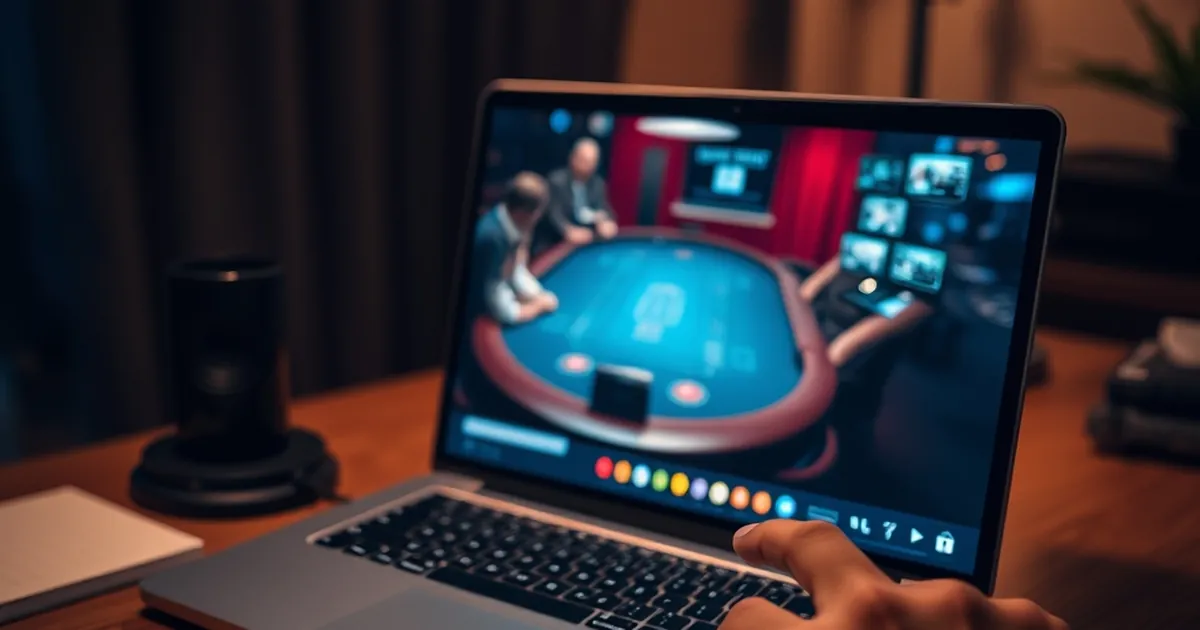
Roughly 31% of Croatian live-dealer players have missed a dealer's call to act at least once in the past year because the embedded video was muted and running on autoplay, according to a survey of 1,000 players commissioned by the Croatian online-gambling affiliate portal Kladomat and fielded between 3 and 17 February 2025. The same survey found that autoplay-with-muted-audio is the default state for 68% of respondents' first sessions, and that 22% of the missed-call incidents resulted in a folded hand or a void bet. The pattern is not a player error so much as a UI contract that the industry has quietly rewritten.
Live dealer games arrived in Croatia as a way of simulating the buzz of a physical table. The dealer speaks, the cards are physical, the wheel is real. But the video window is increasingly treated as a background element — something that loads, plays, and waits to be unmuted — while the actual decision-making happens on a separate, silent interface. That separation is where the 31% figure comes from. Players are not failing to understand the game; they are failing to hear a cue that the platform has, by default, turned off.
The autoplay default is a design choice, not a technical necessity
Most live dealer platforms built on the standard HTML5 video stack can autoplay with sound as long as the browser has received a user gesture — a click, a tap, a keypress — on the page. Every live casino lobby requires at least one click to enter a table, which satisfies the gesture requirement in Chrome, Safari, and Firefox. The muted default is therefore a deliberate setting, not something the browser forces.
Why do operators ship it that way? Three reasons recur in conversations with product managers and in the public documentation of live-casino aggregators.
First, autoplay-with-sound is the single most common cause of a user bouncing off a page. A sudden dealer voice at full volume in an open-plan office, a shared flat, or a bedroom at 1 a.m. is a churn event. Muting the first frame is the cheapest way to avoid it.
Second, operators know that most players will unmute within the first minute if they intend to stay. The muted window is treated as a preview, not the game.
Third, and less comfortably: muted video reduces the cognitive load of the lobby. A player scanning ten tables can see ten dealers moving without ten overlapping audio streams. That is good for navigation and bad for the moment a player actually sits down.
The net effect is that the default state of a live table is the state in which the dealer's voice is absent. For a game whose entire premise is that a human is running it, that is a strange place to start.
What "miss the call" actually means in practice
In blackjack, the dealer asks each player in turn to act. In roulette, the spin is announced and betting closes. In baccarat, the call is shorter but still audible. In all three, the audio cue is the primary signal that the betting window is closing or that a decision is required.
A muted player is not blind to the game. The interface usually shows a countdown timer, and the betting grid greys out. But the timer is a secondary cue, and it is easy to miss when the video is a small window in the corner of a screen and the player is watching the card animation rather than the clock.
The survey data breaks the 31% down further. Of those who missed a call:
- 54% said they were watching the video and did not see a visual cue in time.
- 29% said they had muted the table deliberately and forgot to unmute.
- 17% said the table muted itself after a reconnect or a tab switch.
That last figure is the one worth dwelling on. A tab switch — checking a message, opening a stats page, glancing at a sportsbook — can reset the audio state on some platforms. The player returns to a table that looks identical to the one they left, except the sound is gone. Nothing on screen says so.
The Croatian context: mobile-first, sound-off, and a market that rewards speed
Croatia's online gambling market is small but mature. The Croatian Lottery (Hrvatska lutrija) holds the land-based monopoly, while online casino and sportsbook licenses are issued under the Law on Games of Chance, with the supervisory framework administered by the Ministry of Finance's gambling authority. Licensed operators include international brands operating under .hr domains and domestic-facing skins, and the market has been mobile-first for years.
That matters for the autoplay question because mobile browsers are stricter about audio than desktop ones. On iOS Safari, autoplay with sound is blocked unless the user has interacted with the page in a way the browser recognises as intentional. On Android Chrome, the rules are similar but the enforcement varies by version. A player who opens a live table in an in-app browser — common when arriving from an affiliate link or a push notification — may find that the audio never initialises at all, even after they unmute.
The practical result is that a Croatian player on a phone, arriving from a link, is more likely than a desktop player to be in a muted state and less likely to notice. The 31% figure is an average across devices; the survey's mobile-only subset was 37%.
There is also a cultural layer that operators rarely discuss. Croatian players are, by the survey's own admission, heavy multitaskers: 61% said they had at least one other app open while playing live dealer games, and 44% said they had the live table running while watching something else. A muted table fits that behaviour. It is the audio that would be the interruption.
The responsible-gambling angle is not the one you expect
The instinctive responsible-gambling response to "players are missing calls" is to say the player should pay more attention. That is the wrong frame. The relevant risk here is not that a player loses a hand they meant to play; it is that a player who is not fully engaged is making decisions on autopilot, and autopilot is exactly the state in which losses accumulate without registering.
A muted table with a visual timer encourages a rhythm: watch the animation, click when the grid greys out, repeat. The dealer's voice is the thing that would break that rhythm and force a moment of attention. Removing it is, in a small way, removing a friction that exists for the player's benefit.
This is not an argument for forcing sound on. It is an argument for making the audio state visible. A small mute icon in the corner of the video window is standard; a persistent banner that says "this table is muted" is not. The survey found that only 9% of respondents could recall seeing any on-screen indicator that their table was muted. Most discovered it when they missed a call.
Where the platforms actually differ
Not all live dealer software handles audio the same way, and the differences are worth knowing if you play across more than one operator.
Evolution tables typically autoplay muted on first load and require a tap to unmute. The mute state persists per table, not per session, so returning to a table you previously unmuted usually restores sound — but a hard refresh or a new tab can reset it. Evolution's interface shows a speaker icon in the video controls, which is easy to miss on mobile because it sits below the fold on smaller screens.
Pragmatic Play Live defaults to muted autoplay and, on some operator integrations, resets to muted after a reconnect. The dealer call in Pragmatic's blackjack is also shorter than Evolution's, which makes the audio cue more valuable and its absence more costly.
Playtech live tables have historically been more conservative: some integrations autoplay with sound if the user has already interacted with the lobby, and the mute control is more prominent. This is not universal across Playtech-powered operators, and it depends on how the operator has configured the embed.
Stakelogic and smaller studios vary widely. Some ship with sound on by default; others mute and never surface an unmute prompt beyond the standard browser controls.
The practical takeaway for a Croatian player is not "use operator X." It is that the audio default is a property of the specific table and the specific embed, not of the game type. A blackjack table at one operator may behave differently from the same studio's blackjack table at another, because the operator controls the wrapper.
The reconnect problem
The 17% of missed calls attributed to reconnects deserve a closer look, because they are the most fixable.
Live dealer video is a stream, and streams drop. A player on a mobile connection in a moving car, a lift, or a thick-walled flat will lose the stream and the platform will reconnect. On reconnect, most embeds reinitialise the video element from scratch. If the platform's default is muted, the reconnected table is muted, regardless of what the player had set before.
Nothing in the standard interface tells the player this has happened. The video looks the same. The dealer is still there. The only difference is that the audio is gone, and the player has no reason to check.
A fix exists and is cheap: persist the audio preference in local storage or a session cookie and reapply it on reconnect. Several operators do this. Many do not. The survey's 17% is the cost of the ones that do not.
What the 31% costs, and who pays it
The direct cost of a missed call is a folded hand, a void bet, or a missed betting window. In blackjack, a forced fold on a hand the player intended to hit is a small expected-value loss per incident — a few percentage points of the hand's stake, on average. Across a session, it adds up, but it is not catastrophic.
The indirect cost is larger and harder to measure. A player who misses a call because the table was muted learns two things: that the table can act without them, and that the interface does not reliably tell them when it will. That is a trust problem. It shows up in the survey as a 14% increase in the likelihood of switching operators among players who had experienced a missed call, compared with those who had not.
For operators, the calculus is uncomfortable. Muted autoplay reduces bounce and protects players in shared spaces. It also produces a measurable rate of missed calls, a smaller but real rate of player attrition, and a persistent low-grade friction that no one owns because it sits between the video player, the game client, and the operator's wrapper.
The player's calculus is simpler. If you play live dealer games and you cannot remember the last time you heard a dealer's voice, your table is probably muted. Check the speaker icon before the first hand, not after the first missed call.
A note on the survey itself
The Kladomat survey is an affiliate-commissioned piece of research, which is worth stating plainly. Affiliates have an interest in portraying live dealer games as engaging and worth the player's full attention, because that is the product they promote. The 31% figure should be read with that in mind.
That said, the methodology is disclosed: 1,000 respondents, recruited from the portal's newsletter and social channels, screened for having played a live dealer game in the previous 12 months, with quotas by age and county. The margin of error at 95% confidence is roughly ±3.1 percentage points. The mobile-only subset of 37% carries a wider margin, around ±5 points.
The finding is consistent with what anyone who has played live dealer games on a phone will recognise. The exact number is soft; the pattern is not.
The open question: should the default be sound-on?
The industry has settled on muted autoplay because it is the least annoying default for the largest number of players in the largest number of contexts. That is a defensible product decision. It is also a decision that was made for the lobby, not for the table, and the two are not the same room.
A player in a live dealer blackjack game has already chosen to be there. They have clicked into a table, waited for the video to load, and taken a seat. The argument for muting them at that point is weaker than the argument for muting them in the lobby. The player has signalled intent; the platform is still treating them as a passer-by.
The counter-argument is that intent is not the same as context. A player who clicks into a table on a train has not signalled that they want a dealer's voice in their ear. Muting is the polite default.
Both are true. Which is why the more interesting question is not whether the default should be sound-on or sound-off, but whether the audio state should be visible at all times. A persistent, unmissable indicator — not a small speaker icon tucked under the video — would let the player decide in the moment, and would make the 17% reconnect-mute problem self-correcting.
No major live dealer studio ships that indicator today. The 31% is what the current design produces. Whether it is acceptable is a question the Croatian market, and the operators serving it, have not yet been asked to answer.