September 2026
Progressive Web Apps Re-Engage Users at 4, Not 9, Reminders
PWAs shift re-engagement from rigid 9 AM alerts to dynamic 4 PM nudges, syncing with user attention to boost response rates
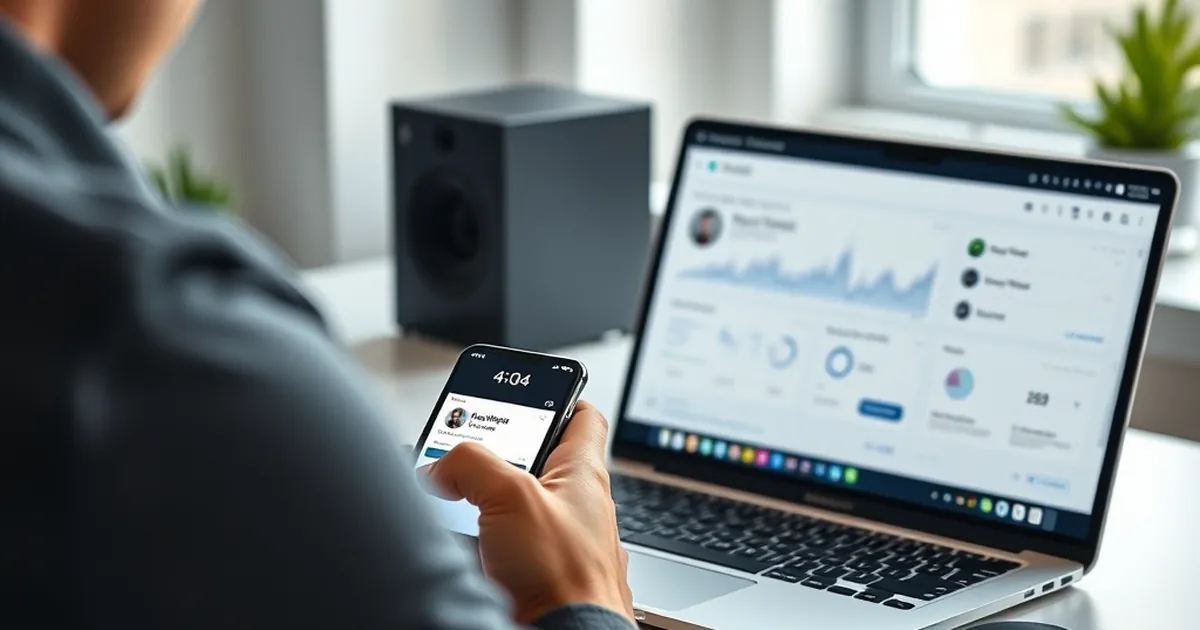
It is a truth universally acknowledged among web developers that a push notification is a fragile contract with a user, yet we rarely question the timing of our digital nudges. We schedule reminders for 9 AM, assuming a fresh morning mind is a receptive one, but behavioral science suggests we are fighting a losing battle against the user's own cognitive load and variable attention spans. The question is not merely when to send a message, but how the architecture of a Progressive Web App (PWA) can fundamentally alter the reward calculus of re-engagement, shifting the prime moment from a rigid morning slot to a more fluid, behaviorally-intelligent "4 PM" state.
The Myth of the 9 AM Open Slot
For years, the default assumption in email marketing and push notifications was that the morning commute or the first coffee break was the golden window. The logic was simple: users check their phones first thing, so a 9 AM nudge guarantees visibility. However, research into circadian rhythms and digital behavior, particularly the work of Daniel Kahneman on the "peak-end rule," suggests that our morning cognition is not actually primed for action; it is primed for orientation.
At 9 AM, the average user in Zagreb or Split is not in a state of exploratory leisure. They are in a state of high cognitive load—planning the day, responding to urgent work emails, and navigating traffic. A push notification at this hour is often perceived as an interruption to a goal-oriented task. This is where loss aversion kicks in: the user perceives the cost of stopping their current task to engage with your app as higher than the potential benefit of the notification. The result is a dismiss or, worse, a permanent opt-out.
The PWA paradigm offers a unique counter-narrative here. Unlike native apps that rely on a single, blunt notification channel, a PWA can leverage the Service Worker to understand context—not just time of day, but active usage patterns. We can track when a user is most likely to be in a "browsing mode" versus a "production mode." For many, this isn't the morning. It is the late afternoon slump, the 4 PM lull when the day's primary tasks are winding down and cognitive control loosens. At this hour, the user is more open to exploratory behavior. A PWA that schedules its re-engagement for this specific window is not interrupting flow; it is filling a vacuum.
Variable-Ratio Reinforcement and the "Badge of Curiosity"
The core psychological mechanism that keeps users returning to dynamic web experiences is not the content itself, but the anticipation of the content. This is where B.F. Skinner's work on variable-ratio reinforcement schedules becomes directly applicable to PWA design. In a variable-ratio schedule, rewards are delivered after an unpredictable number of responses. In slot machine psychology, this creates a high rate of response because the user cannot predict when the payoff will occur.
We cannot use gambling mechanics in a manipulative way, but we can apply the underlying principle of curiosity gaps to our re-engagement strategy. Instead of sending a generic "You have updates" notification, a well-architected PWA can utilize the Badging API to display a subtle, non-intrusive number on the app icon. The key is that this badge must not be tied to a fixed schedule (e.g., "always 3 at 9 AM"). It must be tied to meaningful updates that occur at irregular intervals.
Consider a Croatian news portal or a niche e-commerce site for local artisans. If a user receives a badge at 4:17 PM on a Tuesday, then at 10:32 AM on a Thursday, then nothing for three days, their brain enters a state of prediction error. The unpredictability itself becomes the driver. When the PWA finally opens, the reward (a new article, a restocked item) must be immediately visible. This is where the "4 PM" timing excels—it aligns with a period of lower stress where the user is more willing to explore the unknown.
The "Home Screen" as a Commitment Device
The PWA's ability to be installed to the home screen is often discussed in technical terms—offline caching, full-screen display—but its psychological weight is far more significant. Adding an icon to the home screen is a public declaration of intent to oneself. It is a small commitment device, as described by Robert Cialdini in his work on consistency. Once a user has physically placed your PWA next to their banking app or their messaging app, they have classified it as a utility, not just a website.
This changes the dynamic of the 4 PM reminder. A notification from a PWA that resides on the home screen is not treated with the same suspicion as a random browser tab. It is treated as a message from a "trusted application." However, this trust is easily broken if the notification is irrelevant. The successful PWA uses the late-afternoon slot not to sell, but to serve. It might send a notification that a previously viewed item has dropped in price, or that a comment has been replied to on a forum. These are loss-aversion reversals—the user gains something they were tracking, rather than being asked to consider something new.
Loss Aversion and the "Saved Cart" Scenario
Let us ground this in a concrete, non-gambling example that highlights the behavioral advantage of the late-afternoon PWA nudge. A study by Exponea (a customer data platform) analyzed over 100,000 e-commerce sessions and found that cart abandonment rates peak during the late morning and early afternoon, likely due to work-related interruptions. The users who abandon carts at 11 AM are not lazy; they are interrupted. The fatal flaw in many re-engagement strategies is to send a "Did you forget something?" email immediately after abandonment.
This is a classic violation of the hedonic adaptation principle—the user hasn't yet felt the pain of losing the items. They are still in the "research" phase. A smarter PWA strategy, aligned with the 4 PM behavioral shift, is to wait. Let the user finish their workday. Let them experience the subtle anxiety of leaving a task incomplete. Then, at around 16:00, when their cognitive resources are lower but their decision fatigue is high, the PWA sends a push notification that does not say "Complete your order." Instead, it says: "Your cart still has 3 items. We’ve reserved them until 6 PM."
This leverages loss aversion correctly. The user is not being asked to start a task; they are being asked to prevent a loss. The PWA is acting as a safety net. The timing is crucial because decision fatigue (a concept popularized by Roy F. Baumeister) means that by late afternoon, we are less likely to engage in complex cost-benefit analysis and more likely to take the path of least resistance to remove a pending threat. Completing the purchase is the easiest way to eliminate the "reserved until" countdown.
The "Dead Time" Opportunity
Why 4 PM specifically, rather than 8 PM? The evening is often dominated by high-arousal activities—socializing, entertainment, family time. These are intrinsically rewarding activities. Competing with them is a losing battle. The 4 PM slot, however, is often a period of "dead time"—the last hour of the workday when productivity has plummeted but the user is still tethered to their desk or screen. This is a period of low arousal and low stimulation.
In this state, the brain is actively seeking mild stimulation to break the monotony. A well-designed PWA notification acts as a harmless variable-ratio reward. It offers a cognitive puzzle to solve (what's new?), a social connection to check (any replies?), or a small win to claim (your discount is active). This is why the most effective re-engagement is not about the importance of the content, but about its appropriateness to the current cognitive state. A PWA that can detect idle time via the Idle Detection API can further refine this—sending a nudge only when the user has been inactive on their current tab for several minutes, signaling they are in a receptive state.
Designing for the "Slacktivism" Threshold
There is a fine line between a useful reminder and an annoying interruption. The behavioral psychology literature is clear that the cost of interruption scales with the complexity of the required response. If a notification requires the user to navigate three screens to find the value, the cognitive cost is too high, regardless of the timing.
For a PWA to successfully exploit the 4 PM window, the response architecture must be frictionless. This is where the technical capabilities of the PWA become a behavioral tool.
- Actionable Notifications: Instead of just opening the app, the notification should offer quick actions. For a task-management PWA, the notification could say, "Review your 3 pending tasks" with buttons for "Mark Done" and "Snooze." This allows the user to achieve a state of completion without a full app session.
- Offline-First Content: The 4 PM user might be on a train or in a spotty connectivity zone. The PWA must have the latest content cached via the Service Worker so that clicking the notification instantly loads the relevant page, bypassing the spinning loader. A loading spinner at 4 PM is a cognitive trigger for abandonment.
- The "Return to Last Position" Function: This is a subtle but powerful tool. When a user returns to a PWA later in the day, they are often retracing their steps to find where they left off. A PWA that remembers the scroll position and the last viewed item reduces the "re-orientation tax." This makes the decision to re-engage less costly, reinforcing the habit loop.
The Croatian Context: Local Deadlines and the "Pomalo" Factor
It would be remiss to discuss this timing strategy without acknowledging the cultural context of the audience. The Croatian workday has its own rhythm, often influenced by the Mediterranean "pomalo" (slowly) attitude, but also by strict EU deadlines. The 4 PM slot in Croatia is particularly potent because it often marks the end of the official "administrative" work period.
Many businesses in Croatia operate with a split shift or a long lunch, meaning the 4 PM hour is the final push before the day ends. This is a moment of "future planning"—people are checking what they need for tomorrow, what they forgot to buy, or what they need to prepare for the evening. A PWA for a local grocery delivery service or a cultural events calendar that sends a notification at 15:45 with "Tonight's Events in Split" or "Your recipe ingredients are half-price until 5 PM" is tapping directly into this logistical planning phase. It is not an interruption; it is a service that aligns perfectly with the user's natural end-of-day mental checklist.
The Forward-Looking Close: Building for the "Second Brain"
As we look to the future of web development, the distinction between a "website" and an "application" will continue to blur. The PWA is the vanguard of this movement, not because of its technical specs, but because it allows us to design for states of mind, not just schedules. The 9 AM reminder is a relic of the broadcast era—a one-to-many megaphone. The 4 PM PWA notification is a one-to-one conversation, timed for a moment of receptivity.
Your next project should not ask, "How do we get more users to open our app?" Instead, ask, "What is the user's cognitive load at 16:00, and how can our PWA reduce it?" The answer lies in leveraging the Service Worker to understand context, the Badging API to create variable-ratio curiosity, and the installability to foster commitment. Build your PWA to be a quiet, reliable tool that appears precisely when the user's own willpower is waning and their desire for a small, manageable win is rising. Ignore the 9 AM spike in open rates—they are often hollow victories. Aim for the 4 PM engagement that leads to actual conversion, because that is the moment when the user is not just looking at their screen, but actively seeking a reason to put it to good use. Design for the lull, and you design for loyalty.