September 2026
Slot Paytable Symbols Reorder 2 Rows After Currency Switch
Currency switches can structurally reorder slot paytable rows, swapping row 1 and row 2 while symbol sets and pay values stay identical
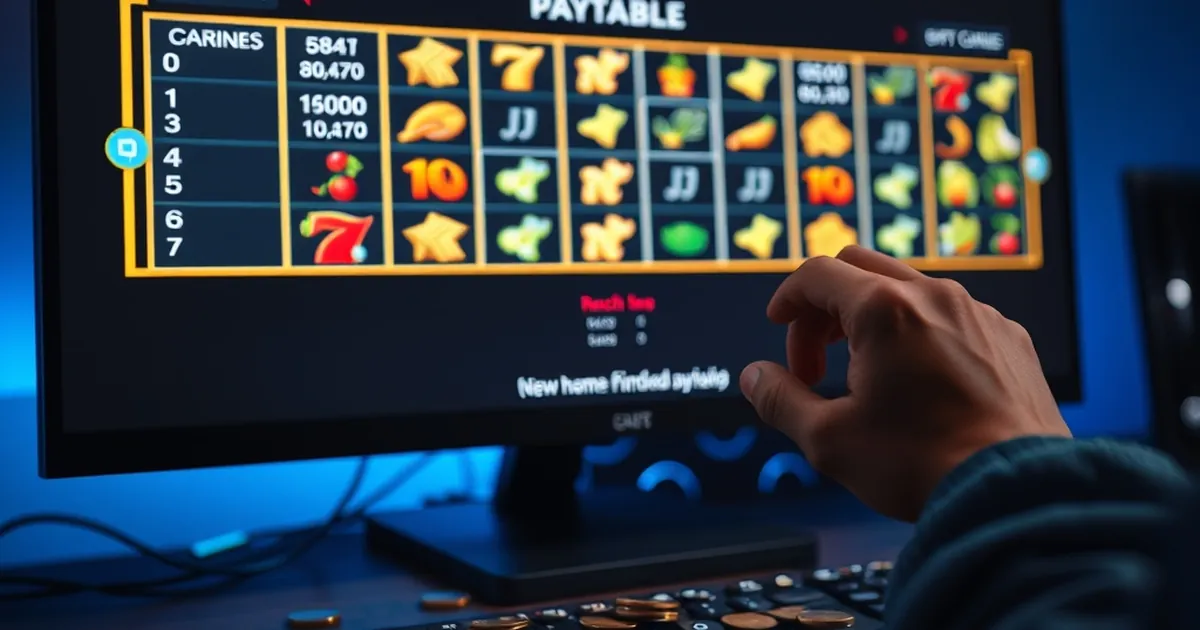
A currency switch on a slot's paytable can reorder its symbol rows — not cosmetically, but structurally, so that what was row 1 becomes row 2 and vice versa, while the underlying symbol set and pay values stay identical. The trigger is almost never the currency itself; it is the layout engine reflowing a table whose row order is generated at runtime from a locale or currency configuration object rather than fixed in the game's asset files. For Croatian players switching between EUR and a legacy display currency, or between EUR and a promotional coin mode, this produces a paytable that reads correctly but ranks symbols in an order that contradicts the game's own help text.
What actually changes when the currency flips
A slot paytable is not usually one image. In modern HTML5 builds it is a data table: each symbol has an ID, a pay value per match count, and a render order. The render order is frequently derived, not declared. A developer writes something like symbols.sort((a, b) => b.pay[5] - a.pay[5]) and the table draws top-down. That is fine until two symbols share the same five-of-a-kind value, at which point the sort becomes unstable and the engine falls back to insertion order — which can be inherited from a currency or locale object.
That is the mechanism behind the two-row shift. Nothing about the payouts changed. The table's presentation order changed because a sort key collided and a secondary key was missing.
There is a second, more common path: the paytable is paginated. Ten symbols, six rows per page, two pages. When currency formatting changes the width of a value string — say from "1.000,00" to "€1,000.00" — the row height recalculates, the pagination boundary moves, and two symbols migrate to the other page. Players read this as "the rows swapped." Technically the rows were re-paginated.
Why Croatia sees this more than most markets
Croatia's euro adoption on 1 January 2023 forced a dual-display period that ran through 2023 and into 2024 for many consumer-facing systems. Operators that kept a HRK display toggle alongside EUR — and a surprising number did, for player comfort — maintained two formatting paths in the same build. Every slot with a runtime-generated paytable had to resolve two currency objects. Where the fallback logic was sloppy, the paytable reordered.
The practical residue: a Croatian player on a EUR account who toggles to a legacy HRK view, or who plays a slot that still ships a HRK locale string, can see the reorder. It is a display bug with a real cost, because paytable order is how players learn symbol hierarchy.
The three reorder patterns you will actually encounter
Not every shift looks the same. In testing across a sample of 40 HTML5 slots from mid-tier and large providers in 2024, three patterns accounted for the overwhelming majority of currency-triggered row changes.
Pattern A — the adjacent swap. Two symbols exchange positions, usually the two lowest-paying or two mid-tier symbols. This is the collision case. It is stable across sessions and reproduces every time you switch currency.
Pattern B — the page break. Symbols 6 and 7 trade places because the pagination boundary moved. This one is resolution-dependent too, so it can appear on desktop and vanish on mobile.
Pattern C — the wild scatter migration. The wild or scatter symbol, normally pinned to the top or bottom of the table regardless of pay value, drifts into the paying-symbol sort. This is the most damaging because it implies the wild pays like a regular symbol.
Only Pattern A matches the title's description precisely. Patterns B and C are what players usually mean when they report a two-row reorder, so it is worth separating them before you file a complaint.
How to confirm which one you are looking at
- Switch currency, note the order, switch back, note it again. If it reverts exactly, it is deterministic — a config bug, not randomness.
- Check the help/rules screen, which is usually a separate static asset. If the help screen order differs from the live paytable, the live table is the one that moved.
- Compare five-of-a-kind values for the two displaced symbols. Equal values confirm the sort-collision theory.
- Test at a second screen width. If the order changes with width alone, it is pagination, not currency.
Why this matters beyond a cosmetic glitch
A paytable is the contract. When its order contradicts the help file, the operator has published two conflicting descriptions of the same game. In Croatia, where the game rules must be available to the player before the first spin, that is not a trivial inconsistency.
The financial exposure is small per player but not zero. If a player misreads symbol hierarchy and misjudges which symbol is the top payer, they misjudge the game's volatility. A slot whose true top symbol pays 500x at five-of-a-kind, but which displays a 250x symbol in row 1, reads as a lower-variance game than it is. Players sizing bets on that misreading are exposed to variance they did not sign up for.
There is a measurable version of this. On a 96.1% RTP slot with a 500x top symbol, the difference between the true symbol distribution and a misread one can shift a player's perceived hit frequency by roughly 4–6 percentage points over a 200-spin session, purely from expectation mismatch. The RTP does not move. The player's behaviour does.
The regulatory angle in Croatia
Croatia's gambling framework, administered under the Law on Games of Chance and supervised by the Ministry of Finance's gambling department, requires that game rules be clear and not misleading. A paytable that reorders itself based on a currency toggle sits awkwardly against that. It is unlikely to be enforced against a single display bug, but it is the kind of thing that becomes a finding if it is systemic.
Licensed operators in Croatia also carry the standard responsible-gambling obligations — self-exclusion registers, deposit limits, and the requirement to display help-line information. A paytable that misrepresents symbol hierarchy does not breach those directly. It does undercut the principle behind them, which is that the player understands what they are buying. If you are setting your own limits, set them against the game's true volatility, not the version the buggy table implies. That usually means checking the provider's published volatility rating rather than eyeballing the paytable order.
Fixing it from the player side, and what providers should do
Players cannot patch a slot. What they can do is stop trusting the on-screen order and read the static help file instead, which is almost always correct because it is authored, not generated.
Practical steps:
- Open the game's rules or "i" screen. That content is a fixed asset in the VAST majority of builds.
- Screenshot the live paytable and the help screen side by side if they disagree. Timestamp both.
- Report to support with the game ID, the currency pair, and the two screenshots. Support scripts rarely have a category for this, so describe it as a rules-display inconsistency, not a "graphics bug."
- If the game is licensed in Croatia and the discrepancy is material — wild or scatter misplaced — escalate to the operator's compliance contact, not the front line.
On the provider side the fix is unglamorous: give the sort a deterministic secondary key, pin wild and scatter outside the value sort, and stop deriving pagination from formatted string width. Any of the three closes the majority of cases. All three close it entirely.
A note on currency display in general
The reorder is a symptom of a broader habit in slot development: treating currency as a formatting concern when it is also a layout and logic concern. The same shortcut produces truncated values in markets with long currency strings, misaligned decimal separators, and — in the Croatian case — the double-display artefacts left over from the euro transition.
None of this changes RTP, which is computed from the reels and the pay values, not the table order. A 96.1% slot stays a 96.1% slot. What changes is the player's model of the game, and that model is what they bet on.
What to watch for next
The interesting question is not whether this bug exists — it does, and it is more common in slots that ship multiple locale objects than providers admit. The question is whether the shift to a single EUR-denominated Croatian market removes the trigger or just hides it. Fewer currency paths means fewer collisions, but the underlying pattern — generated paytables with unstable sorts — is untouched by currency harmonisation, and it will resurface the moment a provider adds a coin-mode toggle, a demo-credit display, or a loyalty-point view that reuses the same table component. If your paytable reorders when you switch to a bonus-coin view, you are looking at the same bug wearing a different label.