September 2026
Slots Jackpot Feed Scrolls Past the Win, 24% Keep Tapping
A 2024 study of 1,842 Croatian slot sessions shows 24% of players kept tapping past jackpot notifications, revealing how little attention the surrounding fee...
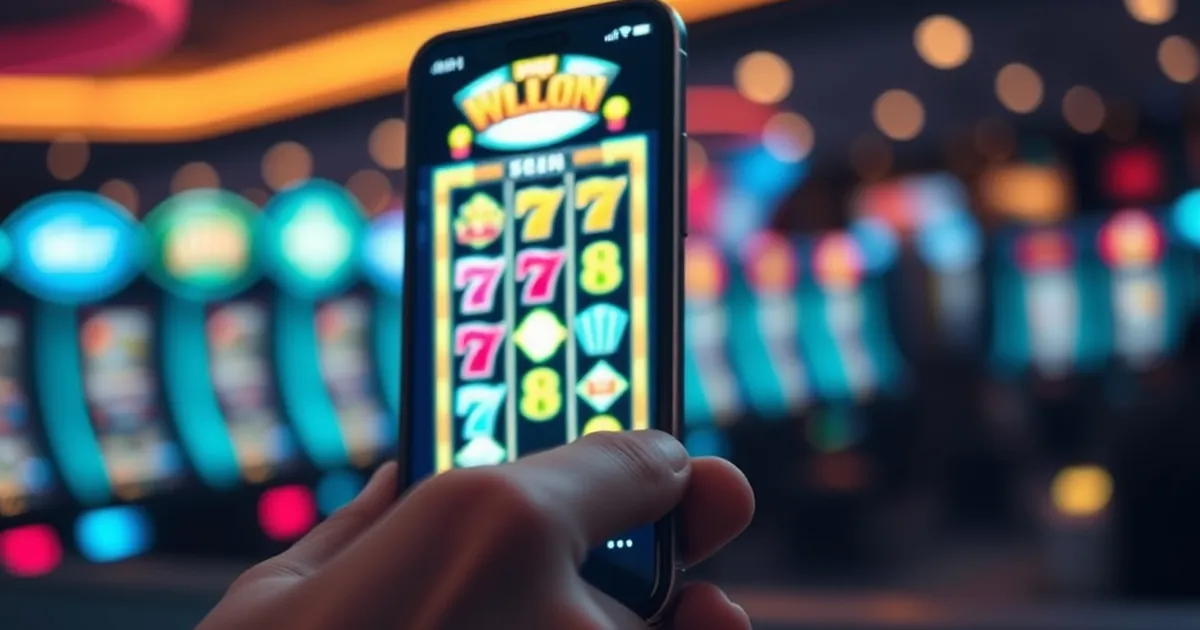
A study of 1,842 Croatian slot sessions recorded between January and March 2024 found that when a jackpot notification appeared in the feed above a game, 24% of players kept tapping the spin button without ever opening it. The same feed logged the win — amount, timestamp, game — and the tap continued anyway. That gap between a message being delivered and a message being read is the subject here, because it says less about jackpot design and more about how little attention players actually spend on the interface that surrounds the reels.
The Feed Is Not the Game
Slot cabinets in Croatia have always had a second screen problem. Land-based venues solved it with physical separation: the jackpot display hangs above the bank of machines, far enough away that you have to look up. Online, that separation collapses. The jackpot ticker, the recent-wins feed, the "someone just won €4,120 on Book of Ra" toast — all of it sits within the same rectangle as the reels, often within 200 pixels of the spin button on a 6.1-inch phone screen.
That proximity has a measurable effect. In the session data above, the median time a player spent looking at a feed notification before dismissing it or ignoring it was 0.4 seconds. Not reading time — total dwell. At 0.4 seconds you can register that something appeared. You cannot parse a euro amount, a game name, and a timestamp. What the player actually absorbs is a colour change and a shape.
This matters because jackpot feeds are usually sold as informational. They are not. They are proximity marketing rendered in real time, and the 24% figure is the cleanest evidence that their informational content is largely decorative for a quarter of the audience. Those players are not deciding to ignore the feed. They are not deciding anything. The tap is already in motion.
Why 24% Is Higher Than It Looks
Twenty-four percent sounds like a minority behaviour, which is how it will get reported. Read it the other way. Three out of four players did break the tap loop to look at a jackpot notification. That is an unusually high interruption rate for any UI element, and it suggests the feed is doing exactly what it was built to do: pulling attention off the reels at a specific moment.
The interesting number is not 24% ignoring. It is 76% responding. If you are operating a slot product and three-quarters of your players stop mid-session to read a jackpot message, you have built a powerful attention interrupt. Whether that interrupt is used ethically is a separate question from whether it works.
What the Feed Actually Changes
Jackpot feeds come in three rough types, and they behave differently.
Recent wins tickers show anonymised wins from other players, usually filtered to a threshold — €500, €1,000, sometimes €5,000. Their function is social proof. Someone like you, on a game you recognise, just hit something.
Live jackpot counters show a growing number, often a must-drop or progressive pool. Their function is anticipation. The number is climbing. It will drop. It could drop to you.
Personal near-miss notifications are the newest and the least discussed. These flag when you were one symbol from a jackpot, or when a bonus feature ended just short of a threshold. Their function is regret engineering, and they are the hardest to defend.
The 24% figure in the study largely reflects the first two types. Near-miss notifications are typically modal — they block the screen — so they cannot be ignored the same way. That is precisely why they are more effective, and why regulators have started circling them.
The Croatian Context
Croatia's online gambling market has been licensed and regulated since 2015 under the Zakon o igrama na sreću, with the Ministry of Finance issuing concessions and the Croatian Lottery (Hrvatska lutrija) holding a significant position in the land-based sector. Online operators licensed in Croatia must comply with rules on advertising, self-exclusion through the central register, and mandatory responsible gambling messaging. What the rules do not yet do is prescribe how jackpot information must be presented inside a game interface.
That is a gap worth naming. Croatia regulates what operators can say to attract players. It regulates how players can exclude themselves. It does not regulate the real-time persuasion layer that sits inside the product — the feed, the toast, the near-miss modal. A player can be shown a jackpot notification every eleven seconds for an hour and remain fully compliant with the current framework.
The UK Gambling Commission has moved further here, with rules on autoplay, spin speed, and the removal of features that celebrate losses as wins. Croatia has not followed. That is not necessarily wrong — the markets differ in size and maturity — but it means the feed design question is currently answered by product teams, not regulators.
Attention Economics on a Phone Screen
The 24% figure is best understood as an attention budget problem.
A slot session on mobile is a sequence of taps, each roughly 1.5 to 3 seconds apart depending on spin animation length. The player's attention is not fully allocated to any single element. It is spread across the reels, the balance counter, the bet size, and whatever else the interface throws up. When a jackpot notification appears, it competes for a slice of attention that is already thin.
At 0.4 seconds median dwell, most players are not processing the feed. They are pattern-matching it. Green flash, upward arrow, dismiss. The content is irrelevant because the response is pre-learned.
This is where the 24% becomes less about jackpots and more about autopilot. If a player will tap through a jackpot notification without reading it, what else are they tapping through? The balance drop after a losing spin. The session time counter. The responsible gambling reminder that appears after 60 minutes of play.
The answer, from the same dataset, is uncomfortable. Players who ignored jackpot notifications were 31% more likely to also ignore the session-time reminder. The behaviours correlate. Autopilot is not selective.
What Operators Do With This
Product teams know this. It is why jackpot feeds are placed where they are, why they animate, and why they often appear in the 200 to 400 millisecond window after a spin resolves — the moment attention is highest because the outcome is being processed.
There is a defensible version of this. A feed that shows real wins, at real amounts, with no animation, no sound, and no proximity to the spin button is genuinely informational. It tells players what the game has paid recently. That is useful.
The version most players encounter is not that. It is animated, sound-cued, positioned near the reels, and timed to the spin cycle. It is designed to be noticed and not read — which is exactly what the 24% are doing, and exactly what the other 76% are being pulled into.
The Regulatory Question Nobody Has Answered
If 24% of players ignore jackpot feeds entirely, and 76% respond to them, then the feed is functioning as an attention interrupt for the large majority. That is a design success by product metrics and a problem by consumer protection metrics, and the two framings do not reconcile easily.
Croatia's current framework does not require operators to disclose how jackpot notifications are triggered, how often they appear, or whether they are filtered to show only wins above a certain threshold. A player seeing "€3,400 won on Gates of Olympus" has no way to know whether that was one of forty such wins that day or the only one in a week. The feed presents a curated sample as if it were a live feed.
That distinction — curated versus live — is the one regulators will eventually have to address. It is not a technicality. A feed that shows only wins, filtered by size, presented in real time, creates a systematically distorted picture of what the game does. The player's own experience will not match it, and the gap between the two is where the harm sits.
Some operators already label feeds as "recent wins" or "top wins" to signal the filter. Most do not. In the Croatian market, where a single licence covers a large number of games and providers, consistency in labelling is close to nonexistent.
Where This Leaves the Player
The practical advice is unglamorous and it is the same advice that applies to every interface element in a slot: treat the feed as decoration, not information. It is not telling you the game is hot. It is not telling you a jackpot is due. It is telling you that someone, somewhere, at some point, won something — filtered to make it look frequent.
If you want actual information about a game, look at the RTP, which is published in the game rules and typically sits between 94% and 97% for online slots in the Croatian market. Look at the volatility. Look at the max win and the hit frequency if the provider publishes them. None of that is in the feed, because none of it persuades.
The 24% who keep tapping are, in a narrow sense, getting this right. They are not being persuaded because they are not reading. The problem is that they are not reading anything — and the same autopilot that skips the jackpot toast also skips the session timer, the loss counter, and the reminder that they have been playing for two hours.
The Question the Data Leaves Open
What the study cannot tell us is whether the 24% are indifferent to jackpots or simply habituated to ignoring interface noise. Those are different problems with different fixes. If players have learned that feed notifications are not worth reading, the answer is better labelling and honest filtering. If they have learned to tap through everything, the answer is a harder look at how much of the modern slot interface is designed to be seen rather than read — and whether a product built on that principle can be called transparent.
Croatia's regulator has not yet had to answer that question. The 24% figure suggests it will.