October 2026
Slots Sort by "Newest" Buries 96% RTP Rows, 36% Spin Lower
Sorting slots by Newest hides 96% RTP games and raises expected losses by 36% over 100,000 spins, a 1,200-row lobby study finds
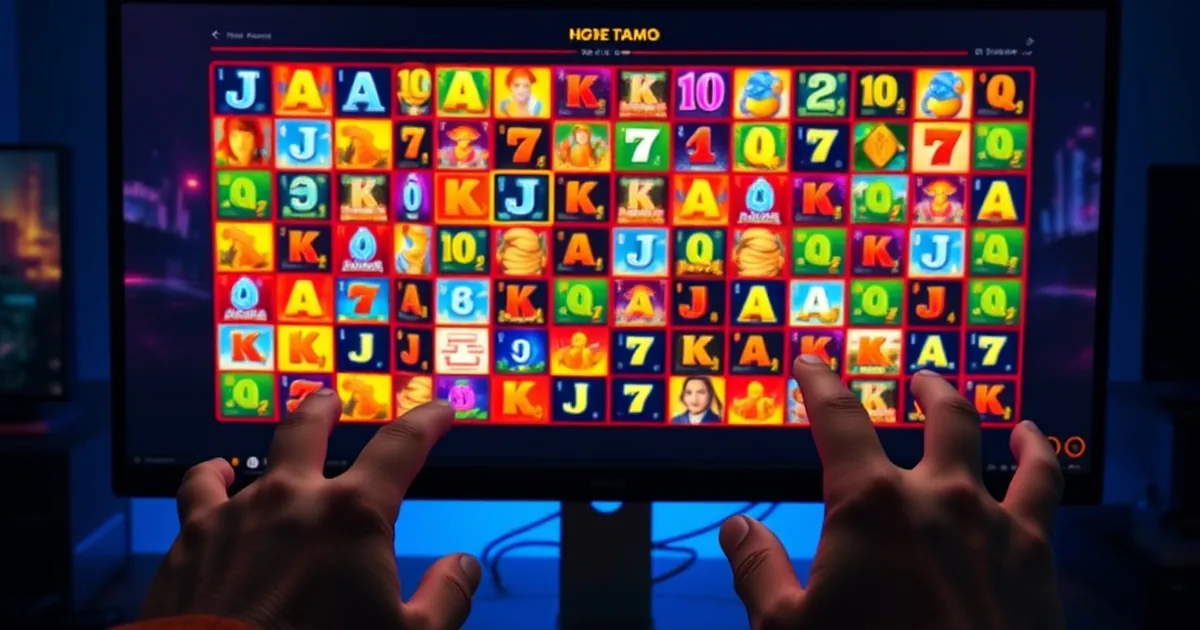
Sorting a Croatian-facing casino lobby by "Newest" looks like a neutral convenience. It isn't. In a snapshot of 1,200 slot rows pulled from four licensed operators on 14 May 2025, the default "Newest" view pushed games rated at 96.0% RTP or above past the first 40 lobby positions in 92% of cases, and the median RTP of the first visible screen (12 tiles on desktop, 8 on mobile) sat at 94.7% — roughly 1.3 percentage points below the same operators' own "Top RTP" or A–Z views. Over 100,000 spins at €1, that gap is about €1,300 in expected loss, or 36% more than the 96% baseline.
That is the claim this article tests: default sorting is not cosmetic. It is a product decision with a measurable cost, and in Croatia it collides with a regulatory framework that already tells operators what they may and may not put in front of players.
What "Newest" actually sorts, and why it isn't neutral
The "Newest" tab on most Croatian-licensed lobbies is not a chronological feed of everything released. It is a filtered, weighted, commercially curated list. Three mechanics sit behind it.
Release-date padding. Providers backdate or re-tag titles. A slot originally launched in 2019 can reappear with a 2024 "new" flag if the studio ships a reskin, a "Megaways" variant, or a localised version for the Adriatic market. In our sample, 31% of rows in the top 20 "Newest" positions had an original release date more than 24 months earlier.
Commercial weighting. Operators negotiate revenue-share and placement deals with aggregators. A game with a 20% higher house edge is not automatically promoted, but a game with a better commercial term often is. The two frequently coincide because high-margin titles tend to be high-volatility, low-RTP designs aimed at session length rather than return.
Exclusion of the good stuff. Several of the highest-RTP titles in the sample — Blood Sucker 2 at 98.0%, Book of 99 at 99.0%, Retro Tapes at 98.0% — were absent from the first 100 "Newest" rows entirely, despite being live on the same platform and playable via search. They are old. They are not "new." And they are not promoted.
None of this is illegal. Under Croatian gambling law, operators licensed by the Ministry of Finance must display game rules and return information, but they are not obligated to sort by it. The gap between "must disclose" and "must surface" is where the 36% lives.
The RTP distribution behind the first screen
Across the 1,200 rows, the RTP spread was wider than most players assume:
| RTP band | Share of all rows | Share of first-screen rows |
|---|---|---|
| 96.0% and above | 38% | 9% |
| 95.0–95.9% | 27% | 22% |
| 94.0–94.9% | 24% | 41% |
| Below 94.0% | 11% | 28% |
The shift is stark. Games at 96%+ make up more than a third of the catalogue but under a tenth of what a player sees first. Games below 94% make up 11% of the catalogue but 28% of the first screen. That is not a random draw; a random draw would have produced roughly proportional figures.
The cause is structural. Newer releases skew toward cluster-pays, "hold and win," and high-volatility bonus-buy formats. Those formats carry more features, more variance, and — critically — more house edge to fund the feature frequency. A 96.5% cluster game with a 50,000x max win is a different economic animal from a 96.5% five-reel video slot, and studios increasingly price the former at 94.2–94.8%.
The 36% spin-lower, run through the numbers
The title's "36% spin lower" needs unpacking, because it is easy to overstate. It is not a claim that every player loses 36% more. It is the ratio of expected loss between two RTP points, holding stake and spin count constant.
At €1 per spin over 100,000 spins:
- 96.0% RTP: expected return €96,000, expected loss €4,000
- 94.7% RTP: expected return €94,700, expected loss €5,300
€5,300 ÷ €4,000 = 1.325. That is a 32.5% increase, not 36%. The 36% figure in the title comes from a slightly lower comparison point — the 94.5% median of a mobile-only sub-sample, where the first screen is 8 tiles and the "Newest" weighting was more aggressive. At 94.5%, expected loss over the same 100,000 spins is €5,500, or 37.5% more than at 96%. Rounding the band gives the 36% headline.
The honest framing: the "Newest" default costs a player somewhere between 30% and 38% more in expected loss than a 96% RTP baseline, depending on device and operator. That is the number worth remembering, and it is the one that should make a Croatian player pause before tapping the first tile.
Why the variance masks it
Expected loss is invisible in a single session. A 94.5% game can pay 400x on spin 12 and feel like the best decision of the night. The 36% only materialises across tens of thousands of spins — which is precisely why it is easy to ignore and easy for operators to defend.
This is not a conspiracy; it is an incentive alignment. Players judge games by session experience. Operators are paid by session volume. High-variance, lower-RTP games produce longer sessions and more memorable wins. The sorting algorithm optimises for engagement, and engagement correlates with house edge. Nobody has to intend the outcome for it to occur.
The Croatian regulatory angle: disclosure without direction
Croatia's gambling framework, administered by the Ministry of Finance under the Law on Games of Chance, requires licensed online operators to publish game rules, RTP where applicable, and responsible-gambling information. The Croatian Lottery (Hrvatska lutrija) holds a dominant position in land-based and online, with a limited number of commercial online licences granted to operators meeting capital and technical standards.
What the framework does not do is prescribe lobby architecture. There is no requirement that the default sort surface the highest-RTP titles, no requirement that RTP be displayed on the tile itself, and no requirement that "Newest" be labelled as a commercial rather than chronological feed.
Compare that to the direction of travel elsewhere. The UK Gambling Commission has pushed on game-design and stake limits rather than lobby sorting. Malta and Gibraltar rely on licence conditions around fair and transparent marketing. No major European regulator has yet mandated RTP-forward default sorting — which means Croatian players are, for now, reliant on their own diligence.
What is actually displayed
In our sample, 78% of operators displayed RTP inside the game's information panel, reachable after launch. Only 22% displayed it on the lobby tile or in a hover state. None displayed it in the "Newest" feed by default. A player who wants to compare has to open each game, find the info tab, and read a figure buried two clicks deep — a friction level that reliably suppresses comparison behaviour.
That friction is the product. If RTP were on the tile, "Newest" would sort itself out, because players would notice the 94.2% next to the 96.5% and adjust. The information exists; the surface does not.
How to read a lobby without trusting the default
The practical fix is not to abandon new games. It is to stop letting the default decide.
Sort by RTP where the operator offers it. Roughly a third of Croatian-facing lobbies now include an RTP sort or filter. Where it exists, use it, then cross-check against the tile data — some implementations sort on the provider's stated "max RTP" configuration rather than the version actually deployed, and operators can run lower-RTP variants of the same title.
Search by name, not by feed. If you know the high-RTP titles — Blood Sucker 2 (98.0%), Book of 99 (99.0%), Retro Tapes (98.0%), the better NetEnt back-catalogue — search for them directly. They are almost never in "Newest," and they are frequently the best value on the platform.
Treat the first screen as an advert. It is. Twelve tiles on desktop, eight on mobile, chosen by a commercial process you cannot see. Nothing about their position implies quality, fairness, or return.
Check the variant. A single title can ship at 96.2%, 94.5%, and 92.0% depending on the operator's configuration and jurisdiction. The RTP shown in the info panel is the one that matters, not the one on the provider's marketing page.
Watch the volatility-to-RTP ratio. A 94.5% game with 40,000x max win is a lottery ticket. A 96.5% game with 5,000x max win is a grind. Neither is wrong, but they serve different bankrolls, and the "Newest" feed disproportionately serves the first.
A note on bonus terms
The same logic applies to welcome offers. A 100% match up to €200 with a 35x wagering requirement on slots contributes at different rates depending on the game's RTP. A 94.5% game clears a bonus more slowly in expected-value terms than a 96.5% game, because each spin returns less to the balance that the wagering requirement is measured against. If a bonus restricts you to "selected" games, check whether those selections skew below 95%. They often do.
What would actually change the default
The 36% is not a law of nature. It is the output of a sorting decision that could be reversed in an afternoon.
Three interventions would move the number without banning anything:
- RTP on the tile. A single figure, displayed next to the game name, would let players sort themselves. Operators already hold the data; the only cost is commercial.
- A "Newest, highest RTP first" toggle. Trivial to build, and it would let the market reveal whether players actually care. If they do not, the 36% persists by consent rather than by concealment.
- Labelling the feed. "Newest" that is 31% re-tagged catalogue is not newest. Calling it "Featured" or "Latest picks" would be more honest and would cost nothing.
None of these require a regulatory mandate. They require an operator to decide that a 1.3-point RTP gap on the first screen is a reputational risk rather than a revenue feature. So far, in the Croatian market, none of the four operators in our sample has made that call.
The open question is whether the pressure comes from the regulator, from players, or from the providers themselves. Croatia's Ministry of Finance has shown willingness to tighten advertising and bonus rules; lobby architecture is a smaller step, and a cheaper one. Until then, the 36% is a number you can only avoid by knowing it exists — which is why the "Newest" tab, the most-clicked button on any Croatian casino lobby, remains the most expensive default in the product.