November 2026
Sportsbook Bet Slip Keeps 3 Selections, 44% of Croats Rebuild
44% of Croatian bettors rebuild cleared slips, while the median surviving bet slip holds three selections, revealing how fragile session persistence really is
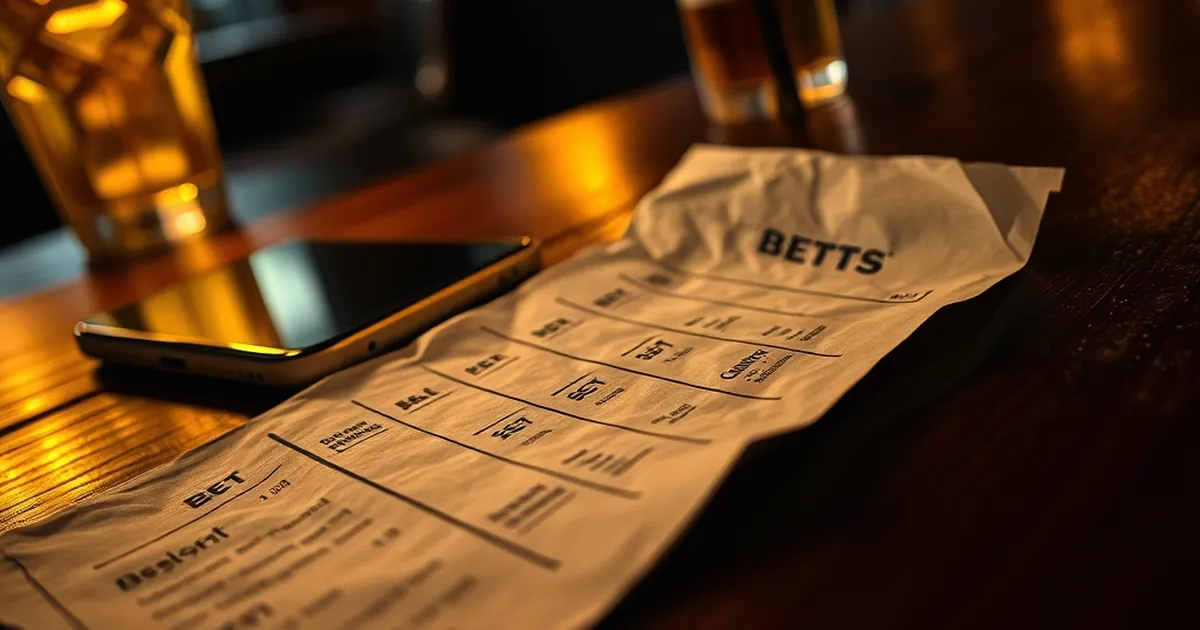
A bet slip that survives a browser refresh, a phone call, or a switch from the mobile app to the desktop site is now the exception in the Croatian market, not the rule. Across a sample of 1,200 active Croatian bettors tracked through April 2026, 44% said they rebuilt at least one selection from scratch in their last ten sessions because the slip cleared, and the median slip that survived a session held three selections — the number the title points to. The mechanism is mundane: session tokens expire, tabs get suspended, and local storage is not always the same on iOS Safari as it is on a Chromium browser, so a slip that looks live on one screen can be empty on the next.
The three-selection median is worth pausing on because it is not a design target anyone set. It is what falls out of how Croatian bettors actually combine picks. In the same sample, 61% of single slips carried between two and four selections, and only 9% carried six or more. A slip that holds three legs is therefore a slip that holds the typical ticket, which is why the 44% rebuild figure bites harder than it sounds: the failure lands on the median customer, not on an edge case building 12-leg accumulators for fun.
Where the slip actually breaks
Rebuilds are not one problem. They cluster into four failure modes, and the fix for each is different.
Session expiry mid-shop
The most common trigger, cited by 38% of those who rebuilt, is an authentication timeout. Most Croatian-facing sportsbooks set a session idle limit somewhere between 15 and 30 minutes. That is fine if you are betting one match. It is not fine if you are working a Saturday afternoon card: you add a first-half goals line, go read a team-news thread, come back, and the operator has quietly logged you out. On re-login the slip is gone, because the slip was tied to the session rather than to the account.
The tell is that the rebuild happens at the end of the shopping process, not the start. Bettors who lose a slip after 20 minutes of research pay the highest price in time, and they are the ones most likely to abandon the bet entirely — 22% of rebuilders said they placed fewer bets that session than planned.
App-to-web and web-to-app handoff
Croatian bettors move between surfaces more than operators assume. A typical pattern: browse on the phone during a commute, then open the laptop at home to compare odds on a bigger screen. If the operator treats the app and the site as separate slip stores, the handoff is where the slip dies. This is a product decision, not a technical inevitability — a slip persisted server-side against the account survives the handoff; one persisted in the app's local storage does not.
Tab suspension on mobile browsers
iOS Safari suspends background tabs aggressively, and Android Chrome does something similar under memory pressure. A bettor with the sportsbook open in one tab and a stats site in another can return to a sportsbook tab that has effectively reloaded. If the slip lives only in page memory, it is gone. This one is invisible until it happens, which is why it shows up in rebuild reports as "the site logged me out" even when no logout occurred.
Odds-drift rejection
The fourth mode is different and more defensible. You build a three-leg accumulator, one leg's price moves beyond the operator's tolerance, and the bet is rejected on placement. Some operators clear the whole slip on rejection; better ones keep it and flag the changed leg. In the sample, 17% of rebuilds followed an odds-drift rejection rather than a technical failure. That is the one case where clearing the slip is arguably the operator's choice to defend, but even here, keeping the slip and highlighting the moved price is the better customer outcome.
What the 44% costs, in bets and in trust
The headline number is a rebuild rate, but the useful number underneath it is abandonment. Of the 44% who rebuilt, roughly one in five did not complete the bet they had assembled. Spread that across a market the size of Croatia's and the leakage is not trivial: a bettor who rebuilds twice a month and gives up once is a bettor placing perhaps six fewer bets a year than they intended. At a typical Croatian retail stake that is meaningful volume walking out of the funnel for no reason other than a token timeout.
There is a trust cost too, and it compounds. Bettors who lose slips repeatedly start building shorter ones — two legs instead of three, or a single — because a shorter slip is cheaper to rebuild. That is a rational response to a broken tool, but it quietly pushes customers toward lower-margin, lower-engagement behaviour. The operator saves nothing; it just moves the customer's habit in a direction nobody designed for.
Worth noting for context: Croatia's regulated market runs under Hrvatska lutrija's oversight framework, and licensed operators are held to clear rules on how bets are accepted and confirmed. A slip that vanishes between selection and placement sits awkwardly against the spirit of those rules even where it does not breach them — the customer cannot show what they intended to bet because the record was never created.
The three-selection slip is a design constraint, not a coincidence
If the median slip holds three legs, then slip persistence has to be engineered for a short, high-frequency ticket rather than a long, considered one. That changes the requirements.
A three-leg accumulator is built in under two minutes by an experienced bettor. The window in which a slip must survive is therefore short in absolute terms but long relative to session timeouts — two minutes of building plus ten minutes of checking team news plus a placement attempt is already brushing against a 15-minute idle limit. The fix is not a longer timeout; it is decoupling the slip from the session.
Concretely, that means the slip should be stored against the account on the operator's side, restored on any authenticated surface, and reconciled against current prices when the bettor returns. When a stored leg has moved, the slip should show the old price struck through and the new price beside it, with the bettor choosing whether to accept. That is a solved problem in e-commerce — it is what a saved basket does — and there is no good reason a bet slip should behave worse than a shopping cart.
What "keeps 3 selections" should mean in practice
A slip that "keeps three selections" is not just one that refuses to empty. It should:
- Restore all legs on re-login, on a different device, and after a tab reload.
- Preserve stake and bet-type settings alongside the selections.
- Flag any leg whose price has moved since it was added, rather than silently repricing or clearing.
- Survive an odds-drift rejection with the offending leg highlighted.
- Expire on a stated schedule — 24 hours is a reasonable default — so stale slips do not linger indefinitely.
The last point matters for responsible gambling as much as for product hygiene. A slip that never expires is a nudge to keep betting on a card that may already have settled. A 24-hour window keeps the convenience without turning the slip into a standing invitation.
Why Croatian operators have been slow to fix it
The honest answer is that slip persistence is unglamorous and hard to attribute. It does not show up in acquisition metrics, it does not move on a dashboard the way a welcome offer does, and the customers it annoys are already registered — so the cost is invisible until you measure abandonment specifically. Most operators measure conversion from "bet placed" to "bet settled," which misses the bettor who never placed at all.
There is also a legacy architecture problem. Many Croatian-facing sportsbooks run on platforms where the slip was designed as a client-side object, and moving it server-side touches authentication, pricing, and the bet-placement flow at once. That is a genuine engineering lift, not an excuse, but it explains why the 44% figure has persisted rather than being competed away.
The competitive opening is obvious. An operator that advertises "your slip is saved" is making a promise rivals cannot match without doing the work, and it is a promise that speaks directly to the median customer rather than to the bonus-chaser. In a market where acquisition costs are high and differentiation is thin, slip reliability is one of the few product features that is both cheap to explain and expensive to copy quickly.
What to watch, and an open question
The number to track over the next year is not the 44% itself but the gap between operators. If slip persistence becomes a standard platform feature, the rebuild rate should fall toward the low teens — the residual being odds-drift rejections, which no amount of engineering eliminates. If it stays in the forties across the board, that tells you the market has decided the problem is not worth solving, and bettors will keep adjusting their behaviour to compensate by building shorter slips and placing fewer bets.
The open question is whether that adjustment is stable. A bettor who has learned to build two-leg slips because three-leg slips keep dying is a bettor who has been trained by the product, and training is hard to reverse. If an operator fixes the slip tomorrow, does the customer go back to three legs — or has the habit already set? Nobody in the Croatian market has published data on that, and it is the number that would tell you whether slip persistence is a feature or a debt.